ESG Terminology Takes a Hit

ESG Terminology Takes a Hit: BlackRock and S&P Alter Strategies Amidst Conservative Opposition

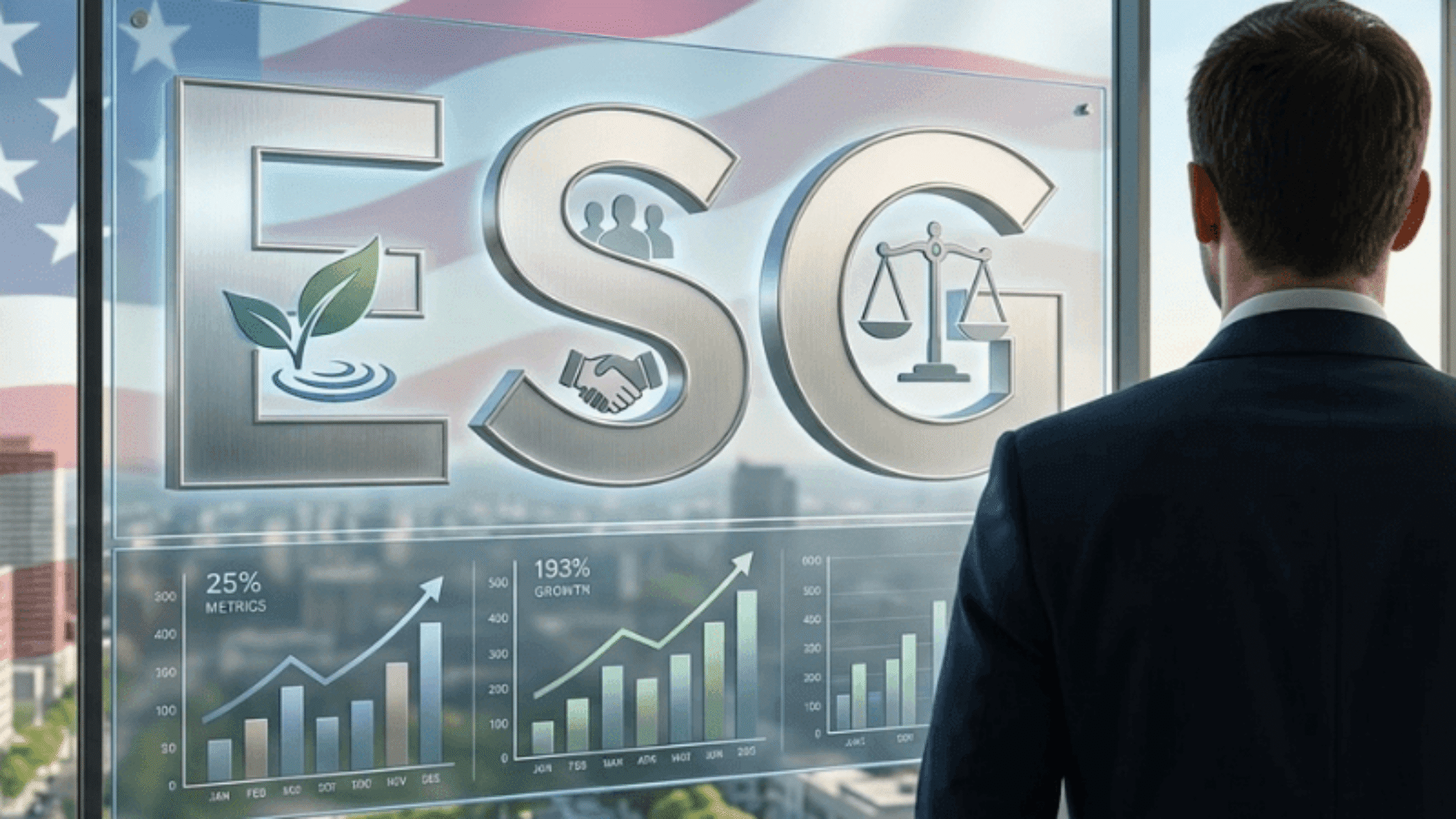
During a recent interview on One America News with Stella Escobedo, I commented on the recent news that Larry Fink of Blackrock and other executives in the financial markets have begun to quietly stop using the ESG terminology because they recognize how toxic it’s become.   


As I stated during the interview, by no means are they doing away with their model of investing billions into DEI and ESG but they now recognize how toxic it’s become so they will still invest billions into it but they will do so quietly and under a different banner. 


In an April article here in the Rubin Review, I talked about how ESG is one of the largest leftist scams that is transferring billions from capitalism to socialism.


ESG ratings are determined by arbitrary and inconsistent measures that liberal rating agencies create. These agencies are not accountable to shareholders but to the whims of leftist elites who do not care about real-world results. Companies are forced to hire expensive consultants to improve their scores, diverting resources away from actual business activities that benefit shareholders and create jobs for hard-working Americans.

First it was Blackrock beginning to backpedal and now it appears ratings agency Standard and Poors (S&P) is doing the same! 


S&P Global has announced they have dropped an alphanumeric scale it launched in 2021 to score publicly rated entities in some sectors and asset classes on environmental, social and governance (ESG) factors when assessing their credit quality.


“We have determined that the dedicated analytical narrative paragraphs in our credit rating reports are most effective at providing detail and transparency on ESG credit factors material to our rating analysis, and these will remain integral to our reports,” it said in a statement released on Friday.


S&P Global Ratings said it will continue to provide analysis of the credit risks stemming from ESG-related issues, they just won’t be given a simple grade. 


The U-turn puts S&P at odds with debt rating rival Moody’s, which still rates ESG criteria on a one to five scale and signals to me that these major financial institutions have gotten the message from the conservative movement in America that we will not accept their abandonment of capitalism.


S&P is influential, with debt ratings that can affect a company’s borrowing cost. As House Republicans target Wall Street’s use of ESG more broadly, conservative state attorneys-general last year opened an investigation into S&P’s use of the factors.


In summary, it’s important to note that while S&P and BlackRock might not be fundamentally altering their ESG strategies, the pushback from conservative circles is exerting its influence, potentially nudging them towards more cautious adjustments in their approach. What that tells us is that when conservatives shine a light on crazy liberal ideas that don’t make sense to the average consumer or investor, the left will back off. That doesn’t mean they’ll give up. They never do. It’s that we, as conservatives, need to push even harder against this financial scam they are fostering against us. We need to pull another “Bud Light” on them.

bob rubin

Are you concerned about inflation, ESG compliances, and the 2022 crypto crash?

Your investment portfolio can be affected by any or all of these factors.

Schedule an appointment with Bob Rubin, your dedicated, conservative financial advisor, for a free portfolio analysis today.

Get started by clicking the button below.

Trump indictment

Amid Trump’s indictments and Biden’s scandals, America’s rule of law remains crucial

In celebrating July 4, we should recommit ourselves to the promise of America. We cannot lose our way from the foundational premise that we are a country of laws, applied equally, with integrity.

In a recent report in Real Clear Politics, Florida Gov. and Republican presidential candidate Ron Desantis took aim at the Department of Justice with a plan to “tear down and rebuild” the federal justice system. The announcement of the Desantis plan coincided with former President Donald Trump’s once-unthinkable arraignment on charges including an extraordinary 31 counts under the seldom-used Espionage Act of 1917. Desantis’ intention: restore a law-enforcement mission “more in line with what the founding fathers envisioned.“

Our second president and founding father John Adams correctly asserted that a government of laws would set America apart in protecting freedom, and that “if there be no other law in the kingdom but the will of a prince, there is no such thing as liberty.”

Our country has historically distinguished itself by understanding that the whim of one in power is not “rule of law” and personal liberties are protected, regardless of whose. It is key to apply laws equally. Recently, we have strayed from this principle and allowed government to, seemingly, rule for the interests of a few.

This has become today’s America.

Whether one thinks the Trump indictment was a stunt or substantive, the bigger issue is the eroding trust in government and further division in the electorate. An ABC/IPSOS poll found that four in five Republicans consider the charges politically motivated, but just 16% of Democrats consider the same.

Amazingly, Adams predicted that such hyper-polarization would ultimately displace law-based government in favor of the law of the jungle.

“The whole state, divided into two factions… the laws, instead of being permanent, and affording constant protection to the lives, liberties, and properties of the citizens, will be alternately the sport of contending factions, and mere vibrations of a pendulum.“

Perhaps the fulfillment of Adam’s prognostication began with the scorched-earth of once-civil judicial selections to achieve political goals. Or with escalating abuses by special prosecutors like Lawrence Walsh, when he unleashed an indictment implicating incumbent Republican President George H.W. Bush days before the 1992 election, or with Kenneth Starr driving an impeachment of Democratic President Bill Clinton that centered on lying about an infidelity. Or, most recently, with the phony (based upon the findings of the Durham report) Russia collusion investigation, driven by a few with Trump derangement syndrome, resulting in a complete devaluation of the impeachment process.

Contrast endless investigations and indictments of Trump against the seeming whitewashing of Hillary’s potential more serious secrecy breaches and recently developing Biden scandals. Also contrast rioters and protesters threatening Supreme Court justices getting off scot-free, while pro-lifers pestering at clinics are harassed and arrested, and parents are targeted as “domestic terrorists” for questioning school boards on transgender policy.

In this ever-downward cycle, no one seems safe, whether because of deprivation of the right of free expression or access to online platforms, employment opportunities or freedom itself. Government’s unmatched resources are brought down on regular, everyday citizens with divergent views.

The spiral must stop, but the question is how.

Adams advocated robust checks and balances. He also constantly preached the indispensability of ethics: “When public virtue is gone… the republic is lost in essence, though it may still exist in form.”

Ethical renewal was also central in Special Counsel John Durham’s report laying bare the DOJ’s and FBI’s “Russia collusion” misdeeds. He said, “Ultimately… meeting [the agencies’] responsibilities comes down to the integrity of the people who take an oath to follow the guidelines and policies currently in place.

How far we’ve come from Republican congressional leaders informing Richard Nixon that his own party could no longer support him due to Watergate. Imagine current Democrat leaders telling Joe Biden how a Trump indictment would break political protocol and be ruinously divisive and potentially dangerous for progressives in a future GOP administration.

A refocus of the DOJ is all well and good. However, we must also demand the rediscovery of public virtue and integrity in all action taken by our institutions. The commitment to the rule of law needs to overcome the scoring of political points. The Durham report and the endless double standard in place underscore the need for integrity if we are to remain a “government of laws” and preserve America as the last, best hope on Earth.

Edward J. Pozzuoli is the president of the law firm Tripp Scott, based in Fort Lauderdale, and hosts the podcast “Politics & Sunshine.”

bob rubin

Are you concerned about inflation, ESG compliances, and the 2022 crypto crash?

Your investment portfolio can be affected by any or all of these factors.

Schedule an appointment with Bob Rubin, your dedicated, conservative financial advisor, for a free portfolio analysis today.

Get started by clicking the button below.

No BS… Just straight forward advice

Contact Bob, the Nation’s Predominant
Politically Conservative Financial Advisor Today!

Call Bob @ (561) 288-1111

Email Bob @ Bob@RubinWA.com

Or schedule a call below!

Brokers’ Betrayal: Concealing Truth on Gold Ownership.

Brokers’ Betrayal: Concealing Truth on Gold Ownership in Economic Chaos – Shocking Revelation!

Brokers’ Betrayal: Concealing Truth on Gold Ownership.

Gold has always been cherished for its beauty, rarity, investment potential, and enduring value. It has played a significant role throughout history, attracting individuals seeking financial security and stability. If you are a politically conservative investor with a keen interest in safeguarding your wealth against unforeseen economic upheavals, it’s crucial to understand the nuances of owning physical gold versus intangible financial assets like gold or silver ETFs.

Investment Considerations

As a conservative investor, you prioritize preserving your capital and mitigating risk. Gold has long been regarded as a reliable asset during times of economic uncertainty, making it an attractive investment option. It acts as a safe-haven asset, maintaining its value when other investments may falter. By diversifying your portfolio with gold, you can shield yourself against inflation and market volatility. To invest in gold, you have multiple avenues available. One option is to acquire physical gold in the form of coins or bars, providing you with a tangible asset that can be securely stored in a personal safe or vault. However, it’s important to acknowledge that physical gold entails certain risks, including the potential for theft or loss.

 Alternatively, you may consider investing in gold through exchange-traded funds (ETFs), mutual funds or gold mining stocks. These financial instruments mostly track the price of gold, offering a convenient and cost-effective way to gain exposure to the precious metal. ETFs and mutual funds can be bought and sold like stocks, providing greater liquidity compared to physical gold. 

Risk vs Reward Considerations

As a politically conservative investor, you value security and seek protection against potential economic or political instability and the liberal spending agenda that is one of the root causes of inflation. Gold has been regarded as a reliable store of value for thousands of years, making it an appealing option to hedge against currency collapses or hyperinflation. For security purposes, you have the option to purchase physical gold and store it in a secure location. Having physical gold readily available ensures you possess a valuable asset that can serve as a form of currency in dire circumstances. Nevertheless, it’s crucial to acknowledge the associated risks, such as the possibility of theft or loss.

 Another approach to owning gold for security reasons is to invest in gold mining stocks. These stocks represent shares in companies engaged in gold mining. By investing in gold mining stocks, you gain exposure to the gold market and potentially benefit from diversification. Nonetheless, it’s important to note that gold mining stocks carry their own set of risks, including company-specific issues and fluctuations in the gold market.

How Concerned Are You About The Biden Economy

It’s worth mentioning that if your objective is to have gold readily available in case of an apocalyptic event, such as a currency collapse or war, gold mining stocks or gold ETFs or mutual funds would not fulfill that purpose. In such extreme scenarios, access to your financial assets would likely not be available. It’s prudent to recognize this limitation and consider that purchasing only ETFs, mutual funds or gold mining stock would not fulfill all of your financial and political objectives.

Help Is On The Way

Given the complexity of owning gold and the importance of making informed decisions aligned with your conservative values, it’s advisable to seek guidance from a trusted financial advisor like Rubin Wealth Advisors, that is aligned with your values and thinks like you do! They understand your concerns about the world we live in and the potential challenges ahead. 

Most financial advisors would tell a politically conservative investor that it’s okay to invest only in gold stocks, ETFs or mutual funds. But these are all financial instruments, not easily accessed in times of crisis. Why are most advisors not recommending physical gold? It’s simply because they aren’t compensated for it or they don’t see the potential risk in the economy with over $100 trillion of debt. Rubin Wealth Advisors can help you navigate the various ownership options and determine the best approach to owning gold based on your unique circumstances and goals.

bob rubin

Are you concerned about inflation, ESG compliances, and the 2022 crypto crash?

Your investment portfolio can be affected by any or all of these factors.

Schedule an appointment with Bob Rubin, your dedicated, conservative financial advisor, for a free portfolio analysis today.

Get started by clicking the button below.

No BS… Just straight forward advice

Contact Bob, the Nation’s Predominant
Politically Conservative Financial Advisor Today!

Call Bob @ (561) 288-1111

Email Bob @ Bob@RubinWA.com

Or schedule a call below!

ESG The Leftist Scam Transferring Billions from Capitalism to Socialism

ESG: The Leftist Scam Transferring Billions from Capitalism to Socialism.

ESG: The Leftist Scam Transferring Billions from Capitalism to Socialism

ESG, or Environmental, Social, and Governance, is a term used to describe a set of non-financial criteria that investors use to evaluate a company’s performance.  While the “idea” behind ESG is to encourage companies to behave in a more responsible and sustainable manner, in reality, it is a leftist agenda disguised as a set of ever-changing rules, objectives, and ratings that companies are supposed to pursue instead of maximizing shareholder value.  Basically, ESG is a scam designed to transfer money from capitalists to socialists. 

 The flawed ESG rating system

First, ESG ratings are determined by arbitrary and inconsistent measures that liberal rating agencies create.  These agencies are not accountable to shareholders but to the whims of leftist elites who do not care about real-world results.  Companies are forced to hire expensive consultants to improve their scores, diverting resources away from actual business activities that benefit shareholders and create jobs for hard-working Americans.

 Additionally, the flawed ESG rating system is not only a threat to the economy but also to the individual freedom of American citizens.  The left is using ESG to advance its socialist agenda, contrary to the principles of capitalism and individual freedom.  By forcing companies to adopt policies that are not in their best interests, ESG is damaging the economy and reducing the ability of companies to create jobs and wealth for American workers.

ESG promotes socialist policies that damage the economy and reduce individual freedom.  The left uses ESG to push its radical agenda, including forcing companies to focus on meaningless objectives like fighting climate change and social justice issues, rather than pursuing profit and creating jobs for Americans.  This is a threat to the capitalist system and undermines the ability of companies to create value for shareholders and jobs for American workers.

How to fight back against ESG

Finally, large companies have the resources and influence to push back against the ESG agenda.  To start off, they can focus on their core business activities that create value for shareholders and jobs for workers, instead of diverting resources to achieve arbitrary ESG goals that benefit no one except leftist elites.  This means rejecting the flawed ESG rating system and measuring success on metrics that matter to the company and its stakeholders.  In addition, companies can prioritize innovation and creativity, creating new products and services that benefit society while generating profits for shareholders.  By rejecting the flawed ESG rating system and measuring success on metrics that matter, companies can remain accountable to their shareholders and avoid diverting resources away from actual business activities. 

Individuals can also play a crucial role in fighting back against the ESG agenda. By educating themselves about the true motives behind ESG and speaking out against its harmful effects, they can help raise awareness of the issue. They can also support companies that reject the ESG agenda and focus on creating value for shareholders and jobs for hard-working Americans. Additionally, individuals can use their power as consumers to influence companies by purchasing products and services from companies that align with their values. This can encourage companies to focus on what really matters and reject the flawed ESG agenda.

 How is money being transferred from capitalism to socialism?

People often ask me this question. Well, the answer is, it’s done in many different ways. Take for example the ESG rating agencies. These agencies arbitrarily decide your company’s ESG score and they’re certainly not free. In order to improve upon that score, you need to hire consultants who will help you rank high on each rating agency.  But as you already know, those standards change frequently, so the consultants need to stay engaged in order to keep your company at the top of the score sheets.  These consultants will tell you that you need to put in place leftist processes that your company needs to follow. This means hiring more leftists to monitor everything and ensure that you continuously meet and exceed those high ESG scores. But of course, the rating system for ESG is constantly changing, so you have to hire additional consultants to figure out which ESG goal or objective you’re going to chase this month or this quarter.  And then you have to hire people to help put in those processes and make sure that you’re actually pursuing these processes and outcomes. All of this is happening while management is supposed to be pursuing shareholder value. But how are they supposed to do that if they’re worried about some nebulous goal?

It’s easy to see why this can be confusing and overwhelming.  But that’s precisely the point. The left is skilled at using words and obfuscation to mask their true intentions. They don’t want you to understand what’s going on. But the truth is, billions of dollars are flowing from capitalism to socialism due to ESG.

 In conclusion, the ESG agenda threatens America’s capitalist system and individual freedom.  It is a leftist scam designed to transfer money from capitalists to socialists. By rejecting the ESG rating system, focusing on measures of success that matter, and promoting transparency and innovation, both large companies and individuals can fight back against the ESG agenda and protect our economy and our freedom. By understanding the true motives behind ESG.

For more information on how you can use your portfolio to fight back against the ESG agenda, contact Bob Rubin from Rubin Wealth Advisors today.

bob rubin

Are you concerned about inflation, ESG compliances, and the 2022 crypto crash?

Your investment portfolio can be affected by any or all of these factors.

Schedule an appointment with Bob Rubin, your dedicated, conservative financial advisor, for a free portfolio analysis today.

Get started by clicking the button below.

No BS… Just straight forward advice

Contact Bob, the Nation’s Predominant
Politically Conservative Financial Advisor Today!

Call Bob @ (561) 288-1111

Email Bob @ Bob@RubinWA.com

Or schedule a call below!

oil

Exposed: Biden Administration’s Foreign Oil Dependency Puts American Energy Independence at Risk – Is it time to Invest in Domestic Oil Industry?

oil

The United States is one of the world’s largest consumers of oil, and historically, the country has relied heavily on foreign imports to meet its energy needs. However, recent developments in the domestic energy industry have created opportunities for investors to support American energy independence and potentially benefit from this growth sector.

So why does the Biden Administration look to Venezuela to satisfy our need for oil? Let’s answer that question by taking advantage of the situation and investing in the domestic oil industry.

Investing in American energy independence is more important than ever, particularly in light of the Biden administration’s policies regarding Venezuela and other foreign sources of oil. The Biden administration’s decision to seek a diplomatic solution to the political crisis in Venezuela has complicated America’s access to Venezuelan oil, which is an important source of crude for U.S. refineries. As a result, domestic energy producers are stepping up to fill the void.

Benefits of Investing in the Domestic Oil Industry

One of the primary benefits of investing in the domestic energy industry is the potential for reduced reliance on foreign oil. American companies are exploring and drilling for domestic resources in places like the Permian Basin in Texas and New Mexico, the Bakken Formation in North Dakota, and the Marcellus Formation in Pennsylvania. These efforts have led to an increase in domestic oil production, which has helped to offset declines in oil imports.

In addition to reducing reliance on foreign oil, investing in the domestic energy industry can create jobs and contribute to economic growth. The American Petroleum Institute estimates that the oil and natural gas industry supports over 10 million jobs in the United States and contributes over $1.5 trillion to the economy. Domestic energy production can also lead to lower energy prices for consumers, which can help to spur economic activity in other sectors.

While the Biden administration is prioritizing the development of renewable energy sources like wind and solar, the idea that they can replace oil and natural gas is unreasonable. The conversion of wind to real energy is inefficient, with wind turbines producing only a fraction of their stated capacity. Furthermore, wind turbines kill millions of migrating birds each year and a few towers have inexplicably collapsed. It is clear that there is still a role for traditional energy sources like oil and natural gas in meeting the country’s energy needs. Domestic energy companies are investing in technologies that reduce carbon emissions, such as carbon capture and storage, as well as exploring alternative sources of energy like geothermal and hydrogen. This balanced approach to energy production is necessary to ensure energy security, affordability, and sustainability for the United States.

How can I support American energy independence?

For conservative investors looking to invest in the domestic energy industry, there are a variety of options available. One strategy is to invest in individual companies that are involved in the exploration, production, or distribution of oil and natural gas. Some companies that may be of interest to conservative investors include ExxonMobil, Chevron, and ConocoPhillips. These companies are well-established, have strong balance sheets, and are likely to continue generating significant cash flows in the coming years.

Another strategy for investing in the domestic energy industry is to invest in exchange-traded funds (ETFs) or mutual funds that specialize in the energy sector. These funds provide exposure to a diversified basket of energy companies and can be an effective way to spread risk and capture the potential upside of the sector. 

Of course, investing in the domestic energy industry is not without risks. The industry is cyclical, and the price of oil and natural gas can be volatile. Political and regulatory risks also exist, particularly as the Biden administration pushes for increased regulation of the industry and a shift toward renewable energy sources.

Despite these risks, however, the case for investing in American energy independence is compelling. The potential for reduced reliance on foreign oil, increased job creation, and the growing demand for cleaner, domestically produced energy sources make the domestic energy industry an attractive investment opportunity. By investing in the industry, conservative investors can support American energy independence and potentially benefit from the growth of this critical sector.

For more information on setting up your portfolio to take advantage of domestic energy production, contact Bob Rubin from Rubin Wealth Advisors today.

bob rubin

Are you concerned about inflation, ESG compliances, and the 2022 crypto crash?

Your investment portfolio can be affected by any or all of these factors.

Schedule an appointment with Bob Rubin, your dedicated, conservative financial advisor, for a free portfolio analysis today.

Get started by clicking the button below.

No BS… Just straight forward advice

Contact Bob, the Nation’s Predominant
Politically Conservative Financial Advisor Today!

Call Bob @ (561) 288-1111

Email Bob @ Bob@RubinWA.com

Or schedule a call below!

Ten Reasons Why ESG is Bad News for Investors

Ten Reasons Why ESG is Bad News for Investors.

Slowly, but steadily, more and more Americans are becoming familiar with the term ESG (Environmental, Social, and Governance). This three-letter acronym is designed to veil a collectivist/fascist corporate approach to business that has been taking hold in publicly traded companies, mutual fund companies and rating agencies over the past decade. It stifles individual liberty, free market capitalism, and returns on investment.

Simply explained by its supporters, ESG is represented as being:

…a set of standards for a company’s behavior used by socially conscious investors to screen potential investments.

Environmental criteria consider how a company safeguards the environment, including corporate policies addressing climate change, for example. Social criteria examine how it manages relationships with employees, suppliers, customers, and the communities where it operates. Governance deals with a company’s leadership, executive pay, audits, internal controls, and shareholder rights.

One of the problems that conservatives have is their tendency to surrender language. That habit has played right into the hands of the little dictators from Blackrock and Vanguard who have been able to shove this collectivist approach to organizing economic activity right down America’s throat. After all, how can you argue against companies “setting standards” to be “socially conscious,” and using “social criteria” in deciding how they “manage relationships?”  These things sound good to most people for one simple reason:  They sound good!

The truth, however, is that this near-Orwellian doublespeak used by ESG advocates is nothing more than lipstick for the pig we all know as socialism (centralized planning, management, and oversight of political, social, and economic activity). For those inclined to think critically, here are ten good reasons why ESG policies are not at all what the flowery language of WEF-types suggest:

  1. ESG deflects attention away from maximizing shareholder value:

When a company starts to make decisions based upon social engineering principles instead of principles relating to maximizing return on investment, they will by definition sacrifice the latter in service to the former.

  1. If you want companies to move away from maximizing shareholder value, do you really believe that they will? The ESG paradox:

Since companies maximizing shareholder value has been the focus of free market capitalism since it was first truly unleashed during the Industrial Revolution in Great Britain during the 18th century, do you really believe that when they say they are supporting ESG agendas they are stepping away from that traditional role? Herein lies a bit a of a paradox for investors to consider.  If you really believe in ESG then you might want to take a lesser return on your investment in pursuit of serving the “general will.” But then you are left with the problem of trusting the company to really support your shared collectivist vision.  What if they cheat?

  1. ESG-reported compliance efforts can be used as an excuse for a company underperforming:

When does a bad company become a good company?  The answer is when they can claim that their “badness” is simply a result of implementing ESG policies to serve the greater good. Management isn’t incompetent. Goods and services aren’t failing to offer customers what they want. Investment decisions weren’t badly made. The climate (like the Devil) made me do it!” What better corporate trick of the light can a C-suite have available than to tell shareholders that they aren’t making money but that they should feel really good about it?

  1. Over time, investment funds comprised of ESG companies tend to underperform:

Writing for the Harvard Business Review back in March of this year, Sanjai Bhagat points out that ESG funds tend to lag in performance when compared to the market overall.  Citing research from the University of Chicago using data from Morningstar, Bhagat writes that those researchers…

… analyzed the Morningstar sustainability ratings of more than 20,000 mutual funds representing over $8 trillion of investor savings. Although the highest-rated funds in terms of sustainability certainly attracted more capital than the lowest-rated funds, none of the high-sustainability funds outperformed any of the lowest-rated funds. Read that again – none of the high ESG funds outperformed the lowest rated, ie. less ESG funds.  None!

When combined with the first three problems noted above, it is easy to draw the conclusion that corporate promotion of ESG initiatives creates opportunities for deception, obfuscation, and failure.  None of those should be appealing to investors who can find the world of picking and choosing winners in the stock market difficult enough even when just considering traditional business metrics of success.

  1. Addressing climate change lies at the heart of ESG policies but climate change science is anything but “settled”:

Whether it is the weather, warming, cooling, emissions, footprints, you name it, the idea that the concerns around “climate change” are settled science is a false one.  We are told that hurricanes are occurring at a historic rate-not true. We are told that rising temperatures threaten our food supply-not true. We are told that CO2 emissions are per se threatening-not true. We are told that wind and solar can replace conventional energy sources-not true. There are credible scientists and inconvenient facts everywhere you look that refute virtually all claims that relate to climate and energy.  These claims are fundamental to ESG corporate strategies.  Said simply, ESG is built upon a bad foundation.

  1. ESG can lead to neglecting necessary safety and maintenance issues:

Pacific Gas & Electric was the poster child for ESG-type policies, even before the term existed. They received top rankings from every environmental rating group you can imagine. The company claimed that over a third of its power came from renewables, which helped deliver a string of best-possible governance ratings from Institutional Shareholder Services (ISS).

That said the company’s track record over the past 20 years has included misleading regulators, felony convictions, and even contributing to the devastating California wildfires of 2017-18. PG&E has been a false flag in terms of its ESG compliance and is the perfect example of how the more self-righteous a C-suite sounds, the less righteous it is likely to act.

  1. Companies that sign on to ESG-type commitments are some of the worst at meeting those objectives (hypocrisy in action):

In the same Harvard Business Review article cited earlier, Bhagat cites research to suggest that a company saying it will support ESG policies doesn’t necessarily translate into measurable or even positive action:

Researchers at Columbia University and the London School of Economics compared the ESG record of U.S. companies in 147 ESG fund portfolios and that of U.S. companies in 2,428 non-ESG portfolios. They found that the companies in the ESG portfolios had worse compliance records for both labor and environmental rules. They also found that companies added to ESG portfolios did not subsequently improve compliance with labor or environmental regulations.

If you think that ESG is truly important, then making your investment decision based upon a company’s stated objectives could bite you from two sets of teeth; poor returns and poor compliance.

  1. ESG replaces a focus on innovation with a focus on compliance:

How can a company focus on finding what is “next” in terms of the best product or services when it is focused on eliminating Styrofoam from the breakroom and creating policies for the use of pronouns? The answer is that it can’t, at least to the extent that it would not be it not concerned with the trivial and mundane.

  1. When you think you are doing something “good” by investing in an ESG company, you are ignoring being serious about addressing long-term problems:

If you truly think that climate change is an issue and that reducing our collective carbon footprint is vital to not forcing man to move to Mars in the next few decades, then do you really believe that the best way to affect change and cause action is how you buy and sell stocks in what can be called an investment aftermarket (remember that the vast majority of stocks being traded in the open market are traded between two entities-the company itself isn’t actually getting any money)?

  1. Who are these masters of the universe to be telling us what is best about environmental, social, and governance policies anyway?

Any time you hear people say they are trying to do what is “right”, what serves the “greater good”, and what is “ethical and moral” you need to ask yourself (and them) to get specific. What is the “right” thing to do and who defines it?  In serving the “greater,” who is included in that category, who is left out, and who is deciding what is good for them?  The ethical thing to do?  What exact system of ethics are you using or are you just talking about things that please you?

This goes back to our surrender of language. We hear these kinds of terms from corporate titans and just take them at their face value because the words sound good.  But you have to ask them and yourself, what do your words mean?

——

In 1970, Milton Friedman penned an essay for The New York Times titled “A Friedman Doctrine: The Social Responsibility of Business is to Increase Its Profits.” He argued that a company has no social responsibility to the public or society; its only commitment is its shareholders.  Times have changed…or have they?  Given the uncertainty of today’s financial climate and all of the inherent contradictions contained with corporate ESG policies, your best choice is to work with a politically conservative financial planner who shares your values and can help make sure your focus remains on ROI and not ESG.

So, I would ask your broker these questions:

Does your firm support ESG?  Why?

Are any of my funds in ESG investments?

Since it’s hard to completely avoid ESG and since ESG negatively affects my rate of return, what are you doing to minimize the amount in my account?

For more questions to ask your broker and how to minimize the amount of ESG in your account contact Bob Rubin from Rubin Wealth Advisors today.

bob rubin

Are you concerned about inflation, ESG compliances, and the 2022 crypto crash?

Your investment portfolio can be affected by any or all of these factors.

Schedule an appointment with Bob Rubin, your dedicated, conservative financial advisor, for a free portfolio analysis today.

Get started by clicking the button below.

No BS… Just straight forward advice

Contact Bob, the Nation’s Predominant
Politically Conservative Financial Advisor Today!

Call Bob @ (561) 288-1111

Email Bob @ Bob@RubinWA.com

Or schedule a call below!

A Safe Haven for Conservative Investors

Protect Your Portfolio from Inflation: The Series I Savings Bond – A Safe Haven for Conservative Investors

It is going to take a bit longer for the Biden administration to realize that inflation may not be transitory and that it may not have peaked. Denial will not make inflation go away!

But while Uncle Joe may take a bit longer to realize that inflation is pulling the rug out from under our investments, I’m urging my clients to take action today!

While I’m recommending several asset classes that can help your portfolio during inflationary periods, there is one investment I’m recommending you purchase while it’s available in 2023:

THE SERIES I SAVINGS BOND

You might’ve just laughed, so why the Series I Savings Bonds?

The Series I Savings Bond is issued by the U.S. Department of the Treasury. They are inflation-protected and nearly risk-free investments that, through April 2023, are paying a 6.89% annual rate of interest.

6.89% interest risk-free? What’s the catch?

The catch is that there are two parts to a Series I Savings Bond’s returns: a fixed rate and a variable rate. The variable rate changes every six months based on the Consumer Price Index.

This means that the bondholders may have rate changes twice a year.
The value of a Series I Savings Bond doesn’t decline, and rates won’t drop below zero.

If inflation continues that rate may go up even further, so they make a great investment if you believe inflation is with us for the long-term.

I mention long-term because Series I Savings Bond investors can’t access the funds for 12 months, and if they redeem the bond within the first five years, they lose the last three months of interest.

How many of these bonds can I purchase?

One of the limitations of the Series I Savings Bond is that individual investors can’t buy more than $10,000 per year.

But there is a workaround – couples can purchase $10,000 each and a family of four can purchase up to $40,000 a year as long as they are in each individual’s name.

I eat my own cooking!

My family and I maxed out our Series I Savings bond purchases for December and we already maxed out our 2023 purchase….

…and there are several additional strategies I’m using to reallocate my family and clients’ portfolios in anticipation of continued inflation.

To find out, give me a call – (561) 288-1160

I’ll be happy to discuss how you can protect your portfolio from inflation, the Biden administration, and your current investment advisor who may not share your politically conservative beliefs.

If you enjoyed this article, check out our other content here! 


bob rubin

Are you concerned about inflation, ESG compliances, and the 2022 crypto crash?

Your investment portfolio can be affected by any or all of these factors.

Schedule an appointment with Bob Rubin, your dedicated, conservative financial advisor, for a free portfolio analysis today.

Get started by clicking the button below.

No BS… Just straight forward advice

Contact Bob, the Nation’s Predominant
Politically Conservative Financial Advisor Today!

Call Bob @ (561) 288-1111

Email Bob @ Bob@RubinWA.com

Or schedule a call below!

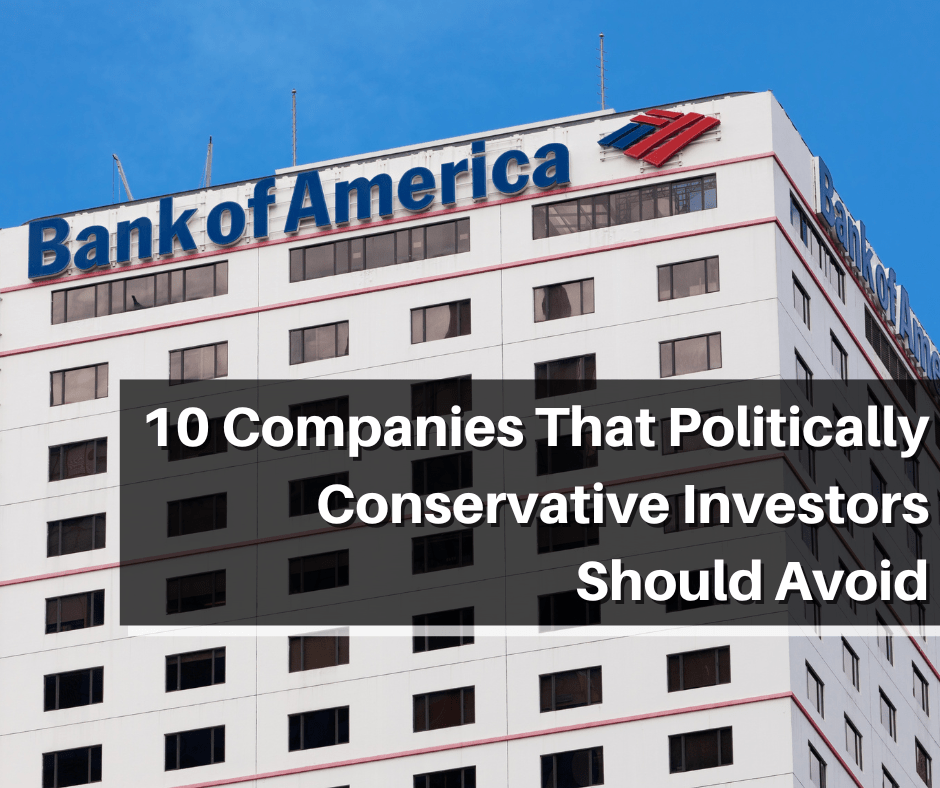
BANK OF “AMERICA” IS ANYTHING BUT

Bank of “America” Is Anything But

Bank of “America” Is Anything But

Bank Of “America” Is Anything But


Rubin Wealth Advisors, in conjunction with American Conservative Values ETF (ACVF) has identified the ten worst companies for political conservatives (or patriots) to invest in. Investors can’t completely avoid placing their funds into all woke companies, but they can avoid investing in the worst offenders.


Announcing “Rubin’s Bottom 10”


Let’s get to #2 on the list


We typically think of government and business as competing, adversarial sides in the United States. The concept of “good guys” and “bad guys” is oversimplified, but people like it. Socialism sees government as good and business as bad, while conservatism sees the opposite.


What role does the bank, America’s financial middleman, play in a binary paradigm? For the past few decades, the answer has been easy. With very few exceptions, banks and bankers are agents of the government because of their highly regulated operations and the consolidation in the industry over the past 20 years. Merrill Lynch, and its wholly-owned subsidiary Bank of America, Corp (NYSE-BAC), are more zealous agents.


Being an agent of the government in these times means being an agent of wokeness. Bank of America made it to near the top (or bottom if you look at it that way) of our list of companies in which conservatives should not invest because they are fully woke in every possible way. It has impacted their external and internal practices, and they do not even pretend to hide it.


Start with their woke policies to try to support the Marxist-inspired climate agenda. You don’t have to look at what outsiders are saying about BOA in this area, and you can just go right to the company’s website:


Building on our longstanding support for the Paris Climate Agreement, we have a goal to achieve net-zero greenhouse gas (GHG) emissions in our financing activities, operations, and supply chain before 2050. Our Environmental Business Initiative will deploy and mobilize $1 trillion by 2030 to accelerate the transition to a low-carbon, sustainable economy as part of a broader $1.5 trillion sustainable finance goal aligned to addressing the United Nation’s Sustainable Development Goals (SDGs). Our multi-year financing commitment provides financial capital, along with significant intellectual capital, to develop solutions to climate change and other environmental challenges.

BOA Supports Marxist Agenda


To make certain you don’t miss the significance of this, BOA is going to deliberately lend money to support a Marxist agenda. They will pick winners and losers in the marketplace based upon their willingness to fall in line with the World Economic Forum and the Paris Climate Accords as opposed to just looking at the overall strength of the company borrowing money. This is centralized planning. This is the government controlling us dressed in an often ill-fitting blue pinstriped suit.


Switching from geographic climate to human climate, BOA has instituted employee training for the purpose of integrating critical race theory ideas into their corporate environment. As was reported in the New York Post last year, BOA has encouraged employees to get “woke at work,” and to that end, has created a curriculum that includes teaching how white supremacy ideas can be found even in preschool-age children:


BOA Officially Hates White People


In the first day of the training, Bank of America teaches employees how race is used to establish and justify systems of power, privilege, and discrimination.


The training program illustrates that white people live with white-skin privileges regardless of their socioeconomic status. White toddlers are implicated in white supremacy by age 3 to 5 and must be actively taught to reject white privilege smog.


The Post story further reported that:

Bank of America immerses employees in full-spectrum CRT, not least framing all white people as oppressors and all racial minorities as irreproachable. “Racism in America idolizes white physical features and white values as supreme over those of others,” the program says. As a result of being part of the “dominant culture,” whites are more likely to “have a more limited imagination,” “experience fear, anxiety, guilt or shame,” “contribute to racial tension, hatred, and violence,” and “react in broken ways.”


Ironically, BOA has decided to officially hate White people considering that it was originally formed by Italian immigrants who were hated and unable to get bank
credit.


Nation’s 2nd Largest Bank


This is the nation’s 2nd largest bank controlling over $2 trillion in assets,
deliberately creating an internal culture of hatred all the while they are attempting to virtue signal. It is perhaps the most egregious example of the pure evil of corporate wokeism that can be pointed to within any major U.S. Corporation.


Then again, BOA is not much more than an extension of the federal government. Their C-suite and HR people come to work daily wearing a bracelet that says WWBD? (What Would Biden Do).


Not content to stop with CRT, BOA also announced in 2019 that it would dedicate $1.25 billion of investment into minority programs in response to what has been a fabricated narrative about increased hate crimes against Asians. In making the announcement, BOA explained the decision by writing:


The urgency we feel to address longstanding issues of inclusion and
racial inequality has only increased following the attacks and hate
speech directed at Asian people over the last year,” said Bank of
America Chairman and CEO Brian Moynihan. “Across the public and
private sectors, it is clear that we must do more – to take action, help
others convene, and serve as a catalyst for a broad-based, collective
response to the critical issues affecting our nation.”


These examples illustrate BOA’s woke practices regarding climate and race, either one of which on their own would be a good reason for conservatives to steer their investment dollars in a different direction. When taken together, they make an irrefutable argument to “walk away from BOA (catchy?).”


But in the words of rocker Jon Bon Jovi in the classic song, Bad Medicine, “Wait a minute. Wait a minute. I’m not done.”


BOA Stepping into the Woke Realm


BOA also has stepped into the woke realm by making it clear that they want people to be able to enter this country illegally. Perhaps this is profit-driven as they might want to charge fees for low-wage illegal workers cashing their paychecks, or perhaps it is just more virtue signaling.


Fox News reported in 2019 that BOA was going to divest in companies that provided private prison and immigration detention services to the federal government and to states and counties. These firms have been objected to by pro-illegal immigration groups because, well, they detain people entering the country illegally.


If I have this straight, BOA first teaches its citizen employees to hate themselves and each other, but then it tells everyone that they love people who aren’t citizens? Confusing? Not to BOA executives. They know exactly what they are doing. They are trying to divide and dilute our country so they can more easily conquer it.


For a conservative investor, BOA is no longer worth their money. This organization is as sinister as one can possibly be. BOA might be “too big to fail” financially, but they have not been too big to fail as an American corporation. They and the people that work for them are a disgrace.
They are not worthy of your dollars. Make one final withdrawal from BOA stock and close your account.


Ps. Note BOA owns Merrill Lynch. That means if you make your trade to divest in BOA stock using your Merrill account, you are still making money for BOA on the exit. Best to close that account, too. I know just where you can go for an orderly transition.

To read the next article in this series, click here.

bob rubin

Are you concerned about inflation, ESG compliances, and the 2022 crypto crash?

Your investment portfolio can be affected by any or all of these factors.

Schedule an appointment with Bob Rubin, your dedicated, conservative financial advisor, for a free portfolio analysis today.

Get started by clicking the button below.

No BS… Just straight forward advice

Contact Bob, the Nation’s Predominant
Politically Conservative Financial Advisor Today!

Call Bob @ (561) 288-1111

Email Bob @ Bob@RubinWA.com

Or schedule a call below!

Active VS Passive Investing

Active vs Passive Investing

Active Vs Passive Investing
Facebook
Twitter
LinkedIn

There are two ways to put your money to work in the markets: passive and active. Both use standard benchmarks like the S&P 500 to measure their success, but dynamic investing tries to beat the benchmark while passive investing attempts to match it.

What does “active investing” mean?

Active investing is a strategy that involves buying and selling stocks often, usually intending to get better returns than the average index. It’s what you think of when you envision traders on Wall Street, though nowadays, you can do it from the comfort of your smartphone using apps like Robinhood.

Bob Rubin, an investment advisor and senior partner at Rubin Wealth Advisors, a financial planning firm in Boca Raton, FL, says that investing usually requires a high level of market analysis and expertise to determine the best time to buy or sell investments.

You can invest actively on your own or hire professionals to do it for you through actively managed mutual funds and traded funds (ETFs). These provide you with a ready-made portfolio of hundreds of investments.

Active fund managers look at a lot of information about each investment in their portfolios. This includes both quantitative and qualitative information about security and the market and economic trends. Managers use this information to buy and sell assets to take advantage of short-term price changes and keep the fund’s asset allocation on track.

Without that constant attention, it’s easy for even the most meticulously designed, actively managed portfolio to fall prey to volatile market fluctuations and rack up short-term losses that may impact long-term goals.
Most investors should avoid active investing, especially regarding their long-term retirement savings.

Pros of investing actively

Flexibility in volatile markets. “In down markets, the active investor can move to a defensive position or hold, like cash or government bonds, to avoid huge losses,” says Brian Stivers, an investment adviser and founder of Stivers Financial Services in Knoxville, Tennessee. In the same way, investors can change their portfolios to hold more stocks in growing markets. By reacting to real-time market conditions, they can beat the performance of market benchmarks like the S&P 500, at least in the short term.

Trading options have grown. Active investors can use trading strategies like hedging with options or shorting the stock to make windfalls that increase their chances of beating market indexes. But these can also significantly increase the costs and risks of active investing, so they are best left to professionals and investors with a lot of experience.

Tax management. Active investing allows an intelligent financial advisor or portfolio manager to make trades that offset gains for tax purposes. This is called “harvesting tax losses.” Even though you can use tax-loss harvesting with passive investing, active investment strategies may offer more opportunities and make it easier to avoid the wash-sale rule because they involve more trading.

If you’re more interested in achieving financial gains instead of perpetuating underperforming woke strategies, call Rubin Wealth Advisors to speak to a professional with the same moral values as you.


Active investing has some drawbacks.

There is an increase in costs. Stocks and ETFs are no longer subject to trading fees at most brokerage firms. There may be fees associated with more complex trading strategies that use derivatives. If you invest in actively managed funds, you’ll pay high fees. Actively managed funds had an average expense ratio of 0.71 percent as of 2020. 

Added Risk.  If correct, active investors can make a significant amount of money but if you make the wrong call, then the opposite is also true. Using borrowed money, or margin, to purchase an investment can cause huge gains and losses if it moves in the opposite direction.

Trend exposure. It’s easy to jump on the bandwagon and follow active investing trends, whether meme stocks or exercise fads related to pandemics. Think about the investor who decided to join the movement of working out at home and bought Peloton (PTON) on January 4, 2021, for $145. Since the pandemic is almost over, that stock is worth less than $10 as of July 2022. Investing based on trends can take time to tell if you’re at the end of the movement or if there’s still room for growth.

How does passive investing work?

The goal of passive investing is to buy assets and keep them for a long time. It’s best described as a hands-off approach: you choose securities and then hold on through ups and downs with a long-term goal like retirement in mind.

Passive strategies usually involve buying shares of index funds or ETFs that try to match the performance of major market indexes like the S&P 500 or Nasdaq Composite. The active approach tends to focus on individual stocks. You can buy shares of these funds through any brokerage account or a Robo-advisor.

Passive investing doesn’t need to be looked at every day because it’s a “set it and forget it” method that only tries to match the performance of the market. This means fewer transactions and much lower fees, especially regarding money. Because of this, financial advisors often recommend it for retirement savings and other investment goals.

Pros of Passive Investing

Lower cost. Passive investing can lower costs for individual investors because there are fewer trades. Also, passively managed funds have lower expense ratios than most actively managed funds because they don’t have to do as much research or work. In 2020, the average cost of passive mutual funds was 0.06%, while the average price of passive ETFs was 0.18%.

You have less risk. Because passive strategies focus on funds, you usually put your money into hundreds or thousands of stocks and bonds. This makes it easy to spread your money around and lowers the chance that one lousy investment will ruin your whole portfolio. If you do your own active investing and don’t diversify enough, one terrible stock could wipe out many of your gains.

Transparency. When you invest passively, you get what you see. The index your fund follows is often part of its name, and it will never invest in anything else. On the other hand, actively managed funds sometimes provide a different level of transparency. A lot is up to the manager’s discretion, and some techniques may even be kept from the public to maintain a competitive edge.

Higher average returns. When investing for the long term, passive funds of all kinds almost always give higher returns. Over 20 years, about 90% of index funds tracking companies of all sizes outperformed their active counterparts. According to the latest S&P Indices Versus Active (SPIVA) report from S&P Dow Jones Indices, even over three years, more than half of them did.

What’s wrong with passive investing?

It doesn’t stand out. If you want the excitement of seeing a single stock’s price go up quickly and skyrocket, passive investing can’t compare.

In lousy bear markets, there is no way to get out. Stivers warns that passive investing has no way out during big market drops because it is made for the long term. Even though the market has always bounced back after a correction, there’s no guarantee it will do so quickly this time. This is one reason why it’s essential to change your asset allocation from time to time over a long period. So, as you get closer to the end of your investing time frame and have less time to recover from a market drop, you can make your portfolio more conservative.

Should You Choose an Active Fund or Style of Investing?

Since passive investing offers higher returns and lower costs over the long term, you might wonder if active investing has any place in the average investor’s portfolio. The answer may be yes for some types of investors.

Keeping your money safe

Stivers says that active investing strategies could help investors who care more about keeping their money than making more of it. For example, someone close to retirement who doesn’t have time to recover from significant losses or who wants to build a steady income instead of seeing steady long-term capital gains might do well with an active strategy.

Strategies that work together

Bob says that active and passive investments don’t have to be opposites and that a mix of the two could work well for many investors.

During a bull market, investors with both active and passive holdings can use their active portfolios to protect against downturns in their passive portfolios. A combination approach can also give investors peace of mind, knowing that their passive, long-term strategy (like retirement funds) is on autopilot. In contrast, their active, short-term approach (like a taxable brokerage account) lets them explore trends without putting their long-term goals at risk.

If you’re more interested in achieving financial gains instead of perpetuating underperforming woke strategies, call Rubin Wealth Advisors to speak to a professional with the same moral values as you.
bob rubin

Are you concerned about inflation, ESG compliances, and the 2022 crypto crash?

Your investment portfolio can be affected by any or all of these factors.

Schedule an appointment with Bob Rubin, your dedicated, conservative financial advisor, for a free portfolio analysis today.

Get started by clicking the button below.

No BS… Just straight forward advice

Contact Bob, the Nation’s Predominant
Politically Conservative Financial Advisor Today!

Call Bob @ (561) 288-1111

Email Bob @ Bob@RubinWA.com

Or schedule a call below!

Investing in Google is a Bad Idea

Investing in Google is a Bad Idea

This is a countdown of the ten worst companies that conservative investors should avoid.  While many or most of the Fortune 500 companies engage in “woke” corporate practices, some are more aggressive than others. Rubin Wealth Advisors, in conjunction with William Flaig, portfolio manager at American Conservative Values ETF (ACVF) has identified ten of the worst companies.  

Investors can’t completely avoid placing their funds into all woke companies, but they can avoid investing in the worst of the offenders. 

Ten Woke Companies that Politically Conservative Investors Should Avoid:

10. Alphabet – GOOG

9. Starbucks – SBUX

8. Apple – AAPL

7. Amazon – AMZN

6. Comcast – CMCSA

5. AT&T – T

4. Nike – NKE

3. Meta (Facebook) – FB

2. Bank of America – BAC

1. Disney – $DIS

We are going to go more in-depth on all of these choices on a week-by-week basis. Subscribe to stay tuned!

Everyone knows who Google is, at least sort of.  The search engine giant has become so popular it has turned itself from a company name into an actual verb (I Googled it.).  Its name is also attached to advertising, smartphones, and digital payment wallets.  Google is everywhere.

It is even in more places than you might think.  Google is only one silo under the publicly traded company Alphabet (NASDAQ stock symbol).  Alphabet also owns YouTube, Fitbit, Mandiant (cyber security), Looker (business intelligence software), Nest (smart home products), Waze (mobile navigation), and DoubleClick (that’s the advertising arm).

Alphabet has found a way to completely encircle the digital landscape.  As an end user of virtually anything, it is nearly impossible to escape daily engagement with at least some portion of the Google empire.  As an investor, however, it is easy to escape them and here are few reasons why you should.

  • YouTube has been a well noted suppressor of not just conservative political content, but also of content they deem to be “misinformation.” It has been this section of their five-part community guidelines that they have invoked to censor everything from reporting on 2020 election interference, to treatments for COVID-19, to factual reporting about Hunter Biden and his ties to corruption in Ukraine and China.
  • In 2020, Google blocked the conservative site, ZeroHedge, from receiving ad revenue because of its reporting on the Black Lives Matter riots. They also warned The Federalist that they could face the same fate for their reporting. Other sites and political celebrities have faced a similar fate. Advertising dollars are the lifeline for political content. 
  • In 2018, Google fired engineer Kevin Cernekee for what Cernekee contends was expressing his conservative political beliefs. Also in 2018, former Google engineer James Damore filed a suit against Google alleging discrimination against white, male employees.
  • Countless conservative journalists have shared with me that Google suppresses search results for conservative information and resources. Routine queries that might be found on the first page of DuckDuckGo as an example, may not show on Google anywhere on the first 3-5 pages, if at all.  Information found on Breitbart is particularly difficult to find in Google searches.  This practice has been reported on in the WSJ and other publications.
  • In its 2019 acquisition of Fitbit, Alphabet gained access to health data for millions of users causing many to abandon their favorite wristlet. The company already collects data from users on their search history, YouTube viewing, and geographic location.  The Fitbit acquisition only increases its reach.

It isn’t just that Alphabet accumulates lots of your personal data, it is that they have demonstrated repeatedly that they are willing to actively suppress, which means attack, conservative content and the providers of that content. This makes them public enemy number one in terms of companies that should not receive the investment of conservative-earned dollars.

A publicly traded company that is so thoroughly woven throughout the mosaic of daily American lives cannot be supported in its efforts to deny fair access to at least half of the population.  More important than its denial of access and its collection of information is their clearly demonstrated willingness to act punitively toward anyone who doesn’t support their woke agenda. Their power is significant. While Alphabet might like to consider itself an information company, they are more of a misinformation, disinformation, and missing information company when it comes to conservatives.

Don’t let Alphabet and its various-owned entities benefit from your investment dollars. There are other ways to find a good return in the marketplace. Just remember, that when you search for those alternative investments, don’t use Google. They likely will not direct your conservative dollars to the right location.

To read the next article in the series, click here.

bob rubin

Are you concerned about inflation, ESG compliances, and the 2022 crypto crash?

Your investment portfolio can be affected by any or all of these factors.

Schedule an appointment with Bob Rubin, your dedicated, conservative financial advisor, for a free portfolio analysis today.

Get started by clicking the button below.

No BS… Just straight forward advice

Contact Bob, the Nation’s Predominant
Politically Conservative Financial Advisor Today!

Call Bob @ (561) 288-1111

Email Bob @ Bob@RubinWA.com

Or schedule a call below!