CEOs follow ESG guidelines despite not agreeing with the ESG raters about the long-term value of their companies.

CEOs follow ESG guidelines despite not agreeing with the ESG raters about the long-term value of their companies.

CEOs follow ESG guidelines despite not agreeing with the ESG raters about the long-term value of their companies.

ESG is good for the environment but bad for business.

Which one is it? This is the beginning of the straddle. On the one hand, most retail investors (and politicians from blue states) who buy ESG do so because they want to save the world. 

They want strong policies, not just wise advice for CEOs about how to look out for their interests. But on the other hand, rating agencies know they can’t tell pension portfolio managers to ignore their fiduciary duty to investors. 

It might look like there’s no way around this. But there’s a way out. What if we look at a company’s self-interest over the next 20 or 30 years? (When defending its most vague ESG rating criteria, BlackRock emphasizes the word “long term.”) 

It’s okay if CEOs of companies and experts hired by rating agencies don’t know what the world will be like in 2050. But, also, think about this: Laws and rules that haven’t been made yet will be among the risks of that future world. The original U.N. document discusses “increasing pressure from civil society to improve performance, transparency, and accountability, which can lead to reputational risks if not handled properly.” 

Here’s the bottom line. By saying that laws and rules that will be in place tomorrow are a risk to a company’s reputation today, ESG raters say they know how our democracy will decide on all these issues in the future. 

CEOs follow ESG guidelines despite not agreeing with the ESG raters about the long-term value of their companies to avoid reputational risk. In this way, the ratings are self-reinforcing in a strange way. They don’t need a reason. 

When CEOs of companies say that adopting ESG standards is in the long-term interests of shareholders, they are telling the truth. But, of course, shareholders lose when there is bad press. But, as Ramaswamy points out, if you follow that thinking, ESG is not much more than “a protection racket.” 

Let’s move on to the next problem with a definition. Let’s say we agree with this project as a whole. We want to determine the company’s risks over the next few decades. This includes risks that come from public policy. So how do we even start something so big? How do we know what the world’s risks will be in 2050? And how do we know which risks investors have already priced in and which they haven’t? 

You can’t, is the answer. These choices are made at random. According to the people who rate companies, Philip Morris (PMI) is not at risk from regulation because it sells 700 billion cigarettes annually. 

MSCI has given Coca-Cola a AAA rating because the people who do the ratings think that, while methane emissions are a new health risk, obesity and type 2 diabetes are not. 

And since we’re talking about methane, let’s talk about McDonald’s, which puts out a lot of greenhouse gases. The MSCI rating for McDonald’s was recently raised to BBB due to the company no longer worrying about climate change. However, some utilities that emit much less are graded much more harshly. S&P removed Tesla (TSLA) from its broad ESG index (SPXESUP) in May because of problems in the workplace. This was done even though the company was the world leader in getting drivers to stop using carbon-based fuel. Exxon (XOM) stays on the index, though. Hmm? How do the people who rate compare bad bosses to warmer earth? You can guess just as well as I can. 

That’s something else. Why do big energy companies stay on so many ESG indexes if carbon emissions are the biggest problem? The raters like to compare firms to others in the same industry. 

So if you’re Exxon and you’re better than Chevron, you get to stay in. This needs to be clarified. Risk is a risk. So what if that means the whole industry goes down? Why don’t raters have more courage? Simple. They want to keep most companies from all sectors in the ESG index so that their return is similar to that of the whole market. They only go after the last ones standing, probably to put “social pressure” on the industry by making it more competitive. 

Even when teams of experts work hard, they often come to very different conclusions about how dangerous something is. So the rating agencies start with the concerns listed in the original U.N. report: environmental, social, and corporate governance issues. 

But the ways they measure risks for each of these issues are very different. One study of six rating agencies found that they used 709 various measures of risk across 64 different categories. All six agencies only used 10 of these metrics. 

Not surprisingly, the fact that there is no standard method means that ESG scores are very different depending on who makes them. Credit risk ratings from other agencies agree 99% of the time, but ESG ratings agree just over 50% of the time. S&P Global gave Credit Suisse a terrible 15% score for corporate governance in January. This was a long way behind competitors like JPMorgan and Goldman Sachs. MSCI gave it a rating of A, which is about the same as the other two banks. Refinitiv was the least harsh, giving Credit Suisse an 81% score for governance. 

Firms like Credit Suisse, which get a wide range of scores from different agencies, may be told to only talk about the best when they talk to investors or the general public. 

Some companies may have fewer choices. And companies that want to be in the top-rated ESG ETFs may have to figure out how to do well on the MSCI index, which is used by most “green” funds now. 

Lastly, let’s ignore all the problems with how these ESG ratings are calculated in terms of ideas and consider how they work in real life. Let’s say we could come up with a good, consistent score. What good would it do for society? That’s hard to answer. It gives big companies a big reason to eliminate “problem” operations. 

Energy giants are selling off dirty refineries in the Middle East and Africa. Now, the Iraqi and Nigerian governments are in charge of these refineries. This doesn’t make the world much better. And some companies that have lost value because of the ESG stigma may decide to stay there as long as they don’t have any big plans for new capital expenditures. Many investors will be happy to buy them because the returns will be higher. 

The best way to resolve this mess would be to get rid of ESG-the whole thing. Not only the “S” and “G,” but also the “E.” Businesses aim to make money for their investors in the long run. Usually, this mission serves the public interest. 

When it doesn’t, the government (federal, state, or local, depending on the issue) is there to act in the public’s best interest. If, for example, you want companies to cut carbon emissions to help the people (to get rid of what economists call “negative externalities”), then do everything you can to pass a carbon tax. That’s clear, reasonable, open, and democratic. Everyone can talk about the issue, and then everyone can vote. 

ESG, on the other hand, is indirect, doesn’t make sense, is hard to understand, and isn’t democratic at its core. It also messes up our government. Do we want to see different groups of blue and red states fighting over whose pension funds go to whose idea of how the future should be run? 

It’s insane. Individual investors are free to think what they want about where the world is going. And if you think we should be running things differently, you can try to change how we do things now. But if that doesn’t work, don’t force other people to invest the way you want them to. 

If you’re more interested in achieving financial gains instead of perpetuating underperforming woke strategies, call Rubin Wealth Management to learn more.

bob rubin

Are you concerned about inflation, ESG compliances, and the 2022 crypto crash?

Your investment portfolio can be affected by any or all of these factors.

Schedule an appointment with Bob Rubin, your dedicated, conservative financial advisor, for a free portfolio analysis today.

Get started by clicking the button below.

No BS… Just straight forward advice

Contact Bob, the Nation’s Predominant
Politically Conservative Financial Advisor Today!

Call Bob @ (561) 288-1111

Email Bob @ Bob@RubinWA.com

Or schedule a call below!

What Is Environmental, Social, and Governance (ESG)?

What Is Environmental, Social, and Governance (ESG)?

What Is Environmental, Social, and Governance (ESG)?
Share on Facebook
Tweet on Twitter
Share on Linkedin

Investors, regulators, customers, and other stakeholders can evaluate a company’s environmental, social, and governance efforts based on measurable metrics. These metrics include the organization’s ability to assess risks and govern the organization transparently and its ability to support various communities.

A company should be able to demonstrate its commitment to these endeavors by analyzing its ESG. Depending on their industry and company, companies collect ESG data using guidelines or frameworks they believe are the most appropriate and relevant.

For example, retailers could assess, monitor, and engage their supply chain vendors as part of an ESG framework. “Retailers have global supply chains, and social media can be used to highlight risks or erode consumer trust.” In a report, the National Retail Federation trade group stated that consumers, investors, and regulatory authorities expect retailers to mitigate ESG risks throughout their supply chains.

By comparing ESG data over time, companies can see if they have improved in their focus areas and how they compare to their peers. The information can then be shared as deemed appropriate by organizations. 

Many choose to provide the data to ESG rating agencies, which can rate companies based on their research, whether or not a company has provided them with their ESG data. A company can use an ESG rating agency – for example, MSCI ESG, Institutional Shareholder Services ESG, and Morningstar Sustainalytics. Some ESG rating agencies use a numerical rating system, while others use a letter grade system.

Fund managers and others seeking to invest in companies with high ESG metrics will often turn to these rating agencies to see where an organization ranks before investing in them.

Companies, in a move to be transparent and hold themselves accountable, can also share this information with the public, ranging from employees to customers. Some companies will go as far as publicizing the release of their ESG report versus quietly posting it, especially if the results are promising.

ENVIRONMENTAL, SOCIAL, AND GOVERNANCE VS. CORPORATE SOCIAL RESPONSIBILITY

Due to investor demand for quantitative data to compare companies, ESG was created as a qualitative concept in contrast to corporate social responsibility. CSR covers areas such as diversity programs or green efforts a company has underway, Christine DiBartolo, senior managing director and Americas head for FTI Consulting’s corporate reputation practice, told Built In.

“You need both. There isn’t one versus the other. ESG is data-driven, disclosure-oriented, and quantitative metrics around those three areas, whereas CSR is the programs and engagement you have around some of those same issues,” she said.

For example, a company may measure the diversity among its workforce as part of its ESG data gathering and sponsor workshops on combating cultural and racial biases as part of its CSR strategy.

Investors are now demanding the ESG component.

If you’re more interested in achieving financial gains instead of perpetuating underperforming woke strategies, call Rubin Wealth Advisors to speak to a professional with the same moral values as you.

Do you want to lean more about ESG and how it’s affecting your financial returns? If so, check out this article!

bob rubin

Are you concerned about inflation, ESG compliances, and the 2022 crypto crash?

Your investment portfolio can be affected by any or all of these factors.

Schedule an appointment with Bob Rubin, your dedicated, conservative financial advisor, for a free portfolio analysis today.

Get started by clicking the button below.

Follow us on Social Media 

No BS… Just straight forward advice

Contact Bob, the Nation’s Predominant
Politically Conservative Financial Advisor Today!

Call Bob @ (561) 288-1111

Email Bob @ Bob@RubinWA.com

Or schedule a call below!

Is ESG a form of Greenwashing?

Is ESG a form of Greenwashing?

Is ESG a form of Greenwashing?
Facebook
Twitter
LinkedIn

The stocks owned by some socially responsible mutual funds and ETFs are strangely out-of-place

Sustainability, responsible, and impact investing (SRI) has historically been dominated by mutual fund companies that align their investment strategies with their values (SRI). Many companies, such as Calvert, Domini, Parnassus, and Pax World, have invested responsibly to make the world a better place. In most cases, their investment managers built portfolios by understanding the companies and industries they invested in and their environmental impact.

Over the last decade, SRI investing strategies have increased in popularity. The 2020 US SIF notes an increase of 42% for investors considering environmental, social, and governance factors across $17 trillion of professionally managed assets.

However, this increased popularity led to more prominent firms looking for easier ways to adopt SRI, and more significant firms sought more accessible ways to join. New, low-cost, index-focused investment landscapes could have played better with legacy firms’ time-consuming research. ESG (Environmental, Social, Governance) research measures sustainable, responsible, and impact investing. Companies are often rated by their peers based on their ESG performance. If fossil fuel companies are more accountable than their less-responsible peers, they could score highly. 

ESG + greenwashing

Companies can easily game ESG ratings when they use them. As an example, let’s look at a fossil fuel company. It boosts its social and governance scores to compensate for its low environmental score. The company may increase its charitable donations to improve the “G” score. Deception is the result of these moves – they’re not responsible. You should monitor your holdings to build a sustainable portfolio based on ESG ratings.

In the absence of human oversight, ESG portfolios are usually just watered-down versions of their underlying benchmarks. William McDonough, co-author of the book “Cradle to Cradle,” says, “Being less bad is still bad.” These portfolios are just less harmful, he says. There is no such thing as sustainable, responsible, or impact investing in ESG investing.

There may be a question asked by investors and advisors: what’s wrong with using less harmful funds? If there were no alternatives, there is nothing wrong with it. These insufficient funds can be dangerous for investors who believe they are investing responsibly. This is greenwashing when they are marketed as “best in class,” “sustainable,” or “low carbon.”

Greenwashing refers to presenting false information or impressions about how a company’s products are eco-friendly. The new ESG index funds are greenwashed when you look under the hood and examine their holdings.

If you’re more interested in achieving financial gains instead of perpetuating underperforming woke strategies, call Rubin Wealth Advisors to speak to a professional with the same moral values as you.

bob rubin

Are you concerned about inflation, ESG compliances, and the 2022 crypto crash?

Your investment portfolio can be affected by any or all of these factors.

Schedule an appointment with Bob Rubin, your dedicated, conservative financial advisor, for a free portfolio analysis today.

Get started by clicking the button below.

No BS… Just straight forward advice

Contact Bob, the Nation’s Predominant
Politically Conservative Financial Advisor Today!

Call Bob @ (561) 288-1111

Email Bob @ Bob@RubinWA.com

Or schedule a call below!

ESG investing may be popular, but be careful: there are many things to dislike.

ESG investing may be popular, but be careful: there are many things to dislike.

ESG investing may be popular, but be careful: there are many things to dislike.

The environmental, social, and governance (ESG) movement is the latest part of a more significant effort to use undemocratic means to achieve public policy goals. As the Business Roundtable tried to replace the focus on maximizing shareholder value with a broader duty to “stakeholders,” ESG initiatives want to replace the long-standing principle of companies and investors on profit and financial return with vague ideas of “sustainability” as a way to make decisions and decide where to put assets in the private sector.

ESG is based on ideas that have been around for a long time. Socially responsible investing and its predecessors are ways of investing that consider the economic effects of limiting investment choices. People who aren’t allowed to invest in “sin” industries let others take advantage of potentially profitable opportunities in, say, tobacco or gun companies. However, they know doing so means giving up economic returns in exchange for some other form of psychic value. This is a clear-eyed tradeoff of costs and benefits, even if it isn’t the most profitable.

ESG, on the other hand, has been called an evolution of socially responsible investing that goes beyond just using a “negative filter” to avoid investing in companies that do certain things. Standard & Poor’s says that ESG “provides a broader framework for looking at social impact than just excluding companies with a history of bad results.” It lets people in the market use positive and negative screens to invest in companies that they think are using sustainable practices, such as protecting the environment and consumers, respecting human rights and having a mix of people of different races and genders. This strategy puts moral values ahead of financial returns.

This last point is getting more and more attention from commentators, people who trade on the market, and people who make policy. Proponents of ESG investing say that it can produce “alpha” or higher returns than expected based on the risk of an investment or portfolio. However, academic research suggests that this is not the case. Unless one is willing to throw out the efficient markets hypothesis completely, it seems clear that any temporary investment advantage from an ESG strategy would soon be arbitraged by how securities markets work. A diversified portfolio of high-scoring ESG companies would likely do worse than a similarly diversified portfolio that didn’t consider ESG. This is because it costs money to choose, track, and report on ESG investments.

Even if ESG strategies are oversold as “doing well by doing good” and only do as well as or slightly worse than index funds, is it wrong for institutional investors to use ESG factors to help them decide how to invest? Applying ESG principles to business management and institutional asset allocation presents several problems and harmful effects.

First, it takes a lot of work to figure out what makes an ESG company with a high score in real life. Even though ESG-driven investing is a relatively new trend, there are already several ESG rating services, and research shows that ESG ratings of the same company can vary a lot between these services (in contrast to bond credit ratings, which are tightly clustered). In one such study, a team from MIT Sloan’s Sustainability Initiative found a correlation of 0.61 between the ratings of five well-known ESG rating agencies. The correlation between the credit ratings of S&P and Moody’s is 0.99. Free cash flow and fixed asset coverage are more flexible criteria than the ones mentioned above. Due to this subjectivity and the fact that everything ESG is popular right now, ESG mandates leave room for service providers in the ESG ecosystem to act in a way that looks for rent.

The fact that ESG ratings are subjective and sometimes follow different rules shows another problem with ESG-driven investing: the tension between the E, S, and G. How to weigh environmental results against the social responsibilities of a company? How does governance rank among these, in turn? Also, “governance” in the ESG context is a misleading term in and of itself. In the traditional sense, good corporate or public-sector governance is based on openness, oversight, fairness, accountability, and, in the case of private enterprise governance, maximizing shareholder value. However, as stakeholder capitalism becomes more popular and mandates like diversity, equity, and inclusion (DEI) make their way into the boardroom, it may be hard to find a lasting agreement on what “good governance” means.

ESG’s lack of accountability is a much bigger problem than the fact that its principles are only sometimes easy to put into practice. This shows up in two different, but both bad, ways.

First, considering non-economic factors when making investment decisions goes against long-held legal and judicial ideas of fiduciary duty. A fiduciary’s role is to maximize the risk-adjusted return of plan assets by Section 404 of the Employment Retirement Income and Security Act of 1974 (ERISA). Putting non-financial factors into the process of choosing investments goes against this obligation. It shows one of the problems with what large institutional investors say about using ESG criteria. These “institutional investors” should be called “investment advisers” or “managers” because they invest on behalf of plan or fund beneficiaries, not for their accounts.

Even though ERISA makes it clear that these fiduciaries should try to get the best risk-adjusted return possible, and in stark contrast to ESG-focused or socially responsible mutual funds that the ultimate beneficial owner chooses for their ESG characteristics, it is irresponsible to use non-economic criteria without getting the end-permission, the investor’s, and to put this over getting the best risk-adjusted return possible.

ESG is just as bad for responsible financial management as it is for the idea that responsive and accountable democratic institutions should set the public policy agenda for society. No matter how good the goals that are part of ESG criteria are, they are better and more appropriate to be pursued through laws and rules, with the consent of the people being governed or their democratically elected representatives. When the private sector takes responsibility for public policy, it breaks the link between representative government and electoral accountability. It also uses capital markets to allocate resources and impose financial consequences based on things that have nothing to do with economics. Finally, it gives control over the direction of public policy to a group of institutional investors and corporate managers who are neither democratically legitimate nor necessarily experts in the field.

Even though ESG has good intentions, it is subjective, doesn’t make sense, and encourages people to act like rentiers. It also isn’t democratic, elitist, financially sound, lowers values, and doesn’t answer to anyone. What else is there not to like?

bob rubin

Are you concerned about inflation, ESG compliances, and the 2022 crypto crash?

Your investment portfolio can be affected by any or all of these factors.

Schedule an appointment with Bob Rubin, your dedicated, conservative financial advisor, for a free portfolio analysis today.

Get started by clicking the button below.

No BS… Just straight forward advice

Contact Bob, the Nation’s Predominant
Politically Conservative Financial Advisor Today!

Call Bob @ (561) 288-1111

Email Bob @ Bob@RubinWA.com

Or schedule a call below!

FTX Scandel

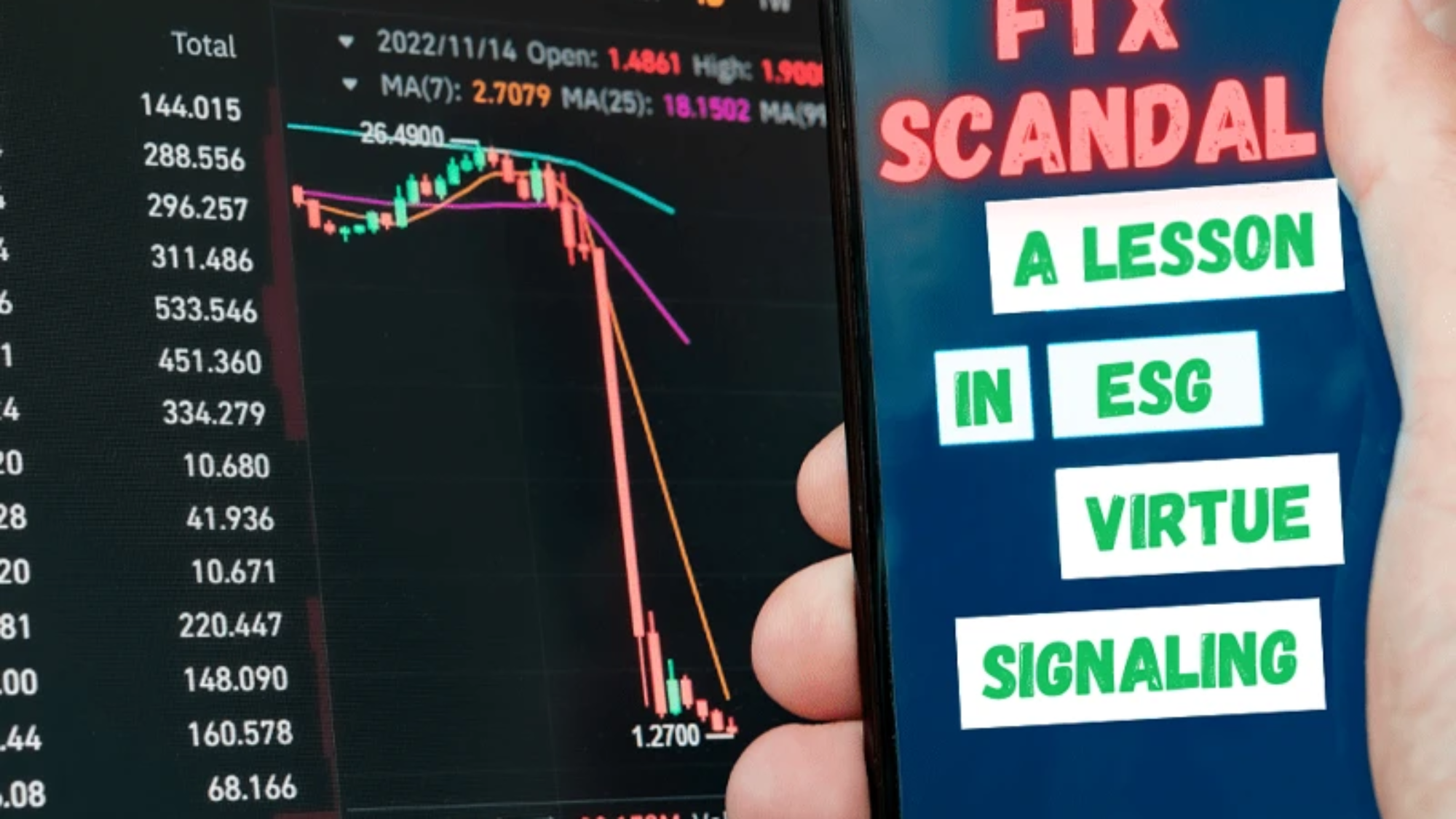
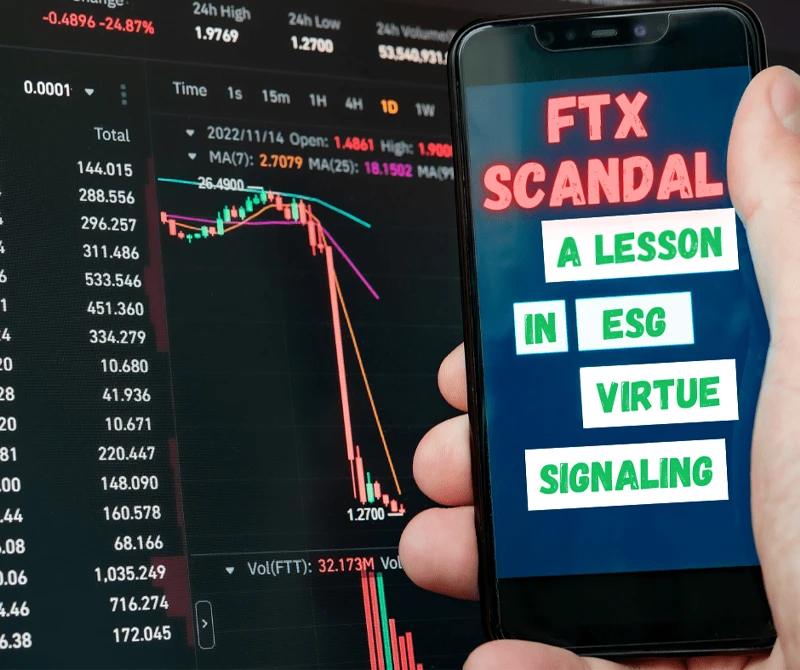
FTX Scandal: A lesson in ESG virtue signaling.

FTX Scandel

By now, many Americans are learning the name of Sam Bankman-Fried, the CEO of FTX, a crypto company that has gone bankrupt and whose corruption is being exposed further and further each day. I’m sure there’s more to come.

But there’s already another little nugget of truth coming to light. And it’s coming straight from the mouth of Bankman-Fried.

After losing billions of dollars in FTX customer funds, he attempted to explain his actions through a series of tweets last week.

The guilty sure do like to talk. This one also tweets.

Bankman-Fried talked about how fame and supposed fortune got to him. He was on the cover of magazines, with FTX becoming “the darling of Silicon Valley.” He described how they became “overconfident and careless.”

He also admitted that he engaged in virtue signaling by having FTX commit to being “carbon neutral.” He even donated to trendy causes, such as a foundation that provides solar energy in the Amazon River basin. Solar power in the Amazon? The only way to get more “virtuous” than that is if somehow they could be saving whales in the Amazon too! 

Bankman-Fried admits that being reckless with customers’ funds caused the downfall of FTX. He also confesses that one of the “dumb” things he did was get wrapped up in ESG.

“In the future, I’m going to care less about the dumb, contentless, ‘good actor’ framework,” he said. “What matters is what you do – is *actually* doing good or bad, not just *talking* about doing good or *using ESG language*.” 

If only Bankman-Fried had read The Rubin Report, he would have known what we’ve been saying about wise investments. Growing one’s wealth is not done correctly when you put yourself at the mercy of what the “woke” ESG crowd wants to do with your investments. There is no such thing as “woke” capitalism. Not unless you want to throw your money down the drain, as many investors did with FTX.

The Wall Street Journal  Editorial Board picked up on this in their editorial a few days ago: 

“Mr. Bankman-Fried also acknowledges that he genuflected to regulators and Democratic lawmakers to win political protection. ESG rating company Truvalue Labs even gave FTX a higher score on “leadership and governance” than Exxon Mobil, though the crypto exchange had only three directors. The directors were Mr. Bankman-Fried, another FTX executive, and an outside attorney. Tuvalu Labs says FTX was given an overall ‘laggard’ score.” 

For his part, Bankman-Fried told Vox that “ESG has been perverted beyond recognition.” He even added that he feels “bad for those who get” harmed by “this dumb game we woke westerners play where we say all the right shibboleths and so everyone likes us.” 

It’s both satisfying and sad to get such a confession from a corrupt financial manipulator who bought into the so-called “woke” ideology of ESG and yet also promoted and reinforced it himself.

The FTX scandal is teaching us many things. One of the biggest lessons we can learn is how much of a crock ESG is. At its best, it’s a virtue signal. At its worst, it will lead investors to financial ruin.

Companies with high ESG ratings may not have the financial scandals of FTX or experience the colossal losses it took. But the mere fact that a company like FTX was given a high ESG rating should make the entire ESG scheme a poster boy for poor decision-making. 

Remember, ESG stands for Environmental, Social, and Governance. It supposedly rates companies on that criteria. Leaving the “environmental” and “social” labels aside for a moment, there was nothing about FTX that should have signaled good governance. Then again, the entire ESG scheme is simply a signal, a virtue signal. It might be the only real thing Bankman-Fried has said to us. 

Take notice of the confessions of this very guilty man. Stay away from ESG.

Did you enjoy this article? If so, check out another article on the dangers of ESG by clicking here!

bob rubin

Are you concerned about inflation, ESG compliances, and the 2022 crypto crash?

Your investment portfolio can be affected by any or all of these factors.

Schedule an appointment with Bob Rubin, your dedicated, conservative financial advisor, for a free portfolio analysis today.

Get started by clicking the button below.

No BS… Just straight forward advice

Contact Bob, the Nation’s Predominant
Politically Conservative Financial Advisor Today!

Call Bob @ (561) 288-1111

Email Bob @ Bob@RubinWA.com

Or schedule a call below!

FTX CRYPTO SCAM

Financial Lessons from the FTX Scandal.

FTX CRYPTO SCAM

By now, most people have heard that FTX Digital, created by Sam Bankman-Fried, went into bankruptcy over the past week. 

As reported in Axios, hardly a right-wing source of news, “dozens of Congressional candidates – most of them Democrats – received campaign contributions or indirect financial support from Sam Bankman-Fried.” 

Bankman-Fried was a relatively unknown billionaire and became the second-biggest donor to Democratic candidates, behind only George Soros. Bankman-Fried contributed over $37 million during this past election cycle, almost all of which went to Democratic candidates and causes. 

It needs to be determined where his money came from. There is an alleged Ukrainian connection alongside President Biden.

But I want to concentrate on the financial lessons we can learn. After all, you don’t want your investments going to tycoons like Bankman-Fried only so they can turn around and support causes that go against what you and I believe in.

I’ve been talking for many years about the fact that 99% of fraud and problems in the crypto markets come from exchanges. Looking at crypto history, you’ll soon learn that almost $12 billion worth of crypto has been stolen from exchanges. And most of that was “your” money. 

There is even a case where the owner of QuardrigaCX, an exchange, unexpectedly died with all the private keys—supposedly losing $190 million of clients’ funds. Poof. 

Consider these facts:


  • Exchanges lose $2.7 million daily on average, and this figure is set to increase in the future.
  • The hacking attacks are becoming increasingly elaborate. It’s a highly-rewarding activity; therefore, it pays for ever-increasing time and effort spent plotting hacks.
  • Exchanges are not cybersecurity enterprises. They run financial marketplaces first, and experience has shown they need to guarantee top-notch security.

As well as losing money on the exchanges mentioned earlier, investors are also losing money on obscure coins like Dogecoin and FTT (or the FTX Token, as it is more commonly known). And there are hundreds more.

Most exchanges will create a coin and offer staking and other services to drive revenue. The only proper way to own cryptocurrency is with Bitcoin and maybe Ethereum. No staking, no borrowing, and no elaborate ways to leverage your investment.

If you buy crypto, stay away from NFTs, stick with the two main currencies, and get them off the exchanges as soon as possible by transferring them to your air-gapped wallet.  

However, the honest advice is about something other than acquiring these two coins or whether you should do so while they are down in price. The most important thing is how you buy them and where you store them.

Our recommendations are straightforward. Use an exchange like Binance or Coinbase to purchase the coins. Then, frequently move them to your wallet. We recommend Trezor, but you can use anyone you want if it’s air-gapped and can hold it in your possession.

If you follow this recommendation, you’ll have a minimum financial exposure if the exchange pulls shenanigans like FTX did or goes bankrupt. Most importantly, your own Bitcoin or Ethereum will be under your control.

The FTX scandal is a financial one, for sure. It might even be a political one. It is undoubtedly a reminder of why you need a financial advisor who has your economic well-being at the top of your mind and shares your values.

I understand how financial tycoons can manipulate investors, especially with many unfamiliar new technologies and various digital currencies now available.

Refrain from being taken by swindlers and hustlers like Bankman-Fried. People like him want your money because they need your money. Sometimes those profits are used for their pleasures – and other times, they use it to support causes and candidates that you wouldn’t dream of keeping with the funds you’ve worked so hard to earn.

The American Dream is about controlling your destiny. At Rubin Wealth Advisors, we will continue to show you how to keep your investments in your controlled accounts and wallets and keep your dreams from becoming tales from the Crypt(o).

If you enjoyed this article, check out our next article on the FTX Scandal to learn more here!

bob rubin

Are you concerned about inflation, ESG compliances, and the 2022 crypto crash?

Your investment portfolio can be affected by any or all of these factors.

Schedule an appointment with Bob Rubin, your dedicated, conservative financial advisor, for a free portfolio analysis today.

Get started by clicking the button below.

No BS… Just straight forward advice

Contact Bob, the Nation’s Predominant
Politically Conservative Financial Advisor Today!

Call Bob @ (561) 288-1111

Email Bob @ Bob@RubinWA.com

Or schedule a call below!

ESG

ESG Funds held 2.7 Trillilon dollars. The SEC looking to stop greenwashing.

ESG

In 2021, ESG funds held $2.7T around the world. But, again, BlackRock, the most significant asset manager in the world, has set the pace.   

But now the pushback is here. Politicians and investors against ESG say it hurts local businesses, doesn’t give good returns, isn’t transparent, and undermines democracy. The SEC is also looking at ESG funds to stop “greenwashing.” Republicans are at the front of the pushback. They say that CEOs of companies are forced to make decisions that go against what they think is best to keep the ESG label. They say the label started because blue-zone states like California and New York followed ESG guidelines when investing most of their pension funds. So maybe it’s time for red-zone states to fight back, say Republicans. 

So far this year, 17 states run by the Republican Party have introduced at least 44 bills to punish companies that adopt ESG-friendly policies, especially financial companies that offer ESG funds.  Recently, Florida Gov. Ron DeSantis told the state pension fund managers that they couldn’t use ESG criteria to choose investments.  Glenn Hegar, the comptroller of Texas, put ten major financial firms, like BlackRock and Credit Suisse, on a “blocklist” for “boycotting energy companies.” Likewise, West Virginia broke ties with some companies, saying their environmental, social, and governance (ESG) efforts hurt the coal industry.   

Even “anti-woke” ETFs have been created in response. The largest is the U.S. Energy ETF (DRLL) from Strive Asset Management. It has raised more than $315 million in less than a month, mostly from small investors.  Vivek Ramaswamy, the executive chair of Strive and an entrepreneur, is a vocal critic of ESG. He says that if ESG didn’t limit U.S. energy stocks, their value would double or triple over the next two years.  With Europe having to ration energy this winter, many people agree that there are better times to lower energy prices, which would stop people from investing in energy.   Those on the left are also attacking ESG funds. 

Progressives say that many of these ESG funds only do little to support socially responsible goals. Instead, they try to make money from investors who want the “feel-good” label. Evidence? The most significant ESG funds, like the US ESG Aware ETF (ESGU) from iShares, have similar weights for about 90% of the S&P 500. Their performance is also very similar to that of SPY. That’s a low standard. But that doesn’t stop these ETFs from charging much money to be an “ESG investor.” On average, the fees for ESG ETFs are 43% higher than those for other ETFs. For example, BlackRock’s ESG Aware fund has five times higher prices than its Core S&P 500 fund. The same things are said about rating agencies, which also get a lot of money from this considerable fee stream. About 160 providers make ESG rating data and sell it. By far, MSCI is the most used. Bloomberg Intelligence says that 60% of the money individual investors have put into ESG funds worldwide has gone into funds made with MSCI’s ratings. UBS Group AG says that 40% of all these fees go straight to MSCI. So MSCI has made much money from the recent rush of investors into ESG. From 2019 to 2021, its price went up, but it has been going down for a while now.  Let’s use MSCI to take a different look at our “low bar” point about ESG. The iShares ESGU fund has a AAA rating from MSCI. Not a big surprise. But SPY also has a AAA rating from 

MSCI! What’s up?  The drop of 5% in large-cap companies and underweighting of a more significant number of companies is a big deal for the underweighting of the larger companies. They are crying out. This is what keeps conservatives going. But it’s also a letdown for progressives, who may have thought that these funds would change capitalism for the better. At the same time, rating agencies like MSCI make a lot of money by selling their ratings to funds, which investors pay for. And that makes everyone mad. In short, there is criticism from everywhere. So, what exactly is ESG? No one knows, and that’s the thing. In 2004, the United Nations released a report arguing that investors should consider “ESG factors” when investing. When you read this report, you will encounter a simple definition puzzle. At times, ESG is about how companies do things that are good for the world, like reducing carbon emissions, ensuring workers don’t get hurt on the job, or helping their local communities, but likely at a high cost to the companies. In other words, ESG entails practices in the firm’s interests over time. Which one is it? This is the beginning of the straddle. On the one hand, most retail investors (and politicians from blue states) who buy ESG do so because they want to save the world. They want strong policies, not just wise advice for CEOs about how to look out for their interests. But on the other hand, rating agencies know they can’t tell pension portfolio managers to ignore their fiduciary duty to investors. It might look like there’s no way around this. But there’s a way out. What if we look at a company’s self-interest over the next 20 or 30 years? (When defending its most vague ESG rating criteria, BlackRock emphasizes the word “long term.”)   It’s okay if CEOs of companies and experts hired by rating agencies don’t know what the world will be like in 2050. But, also, think about this: Laws and rules that haven’t been made yet will be among the risks of that future world. The original U.N. document discusses “increasing pressure from civil society to improve performance, transparency, and accountability, which can lead to reputational risks if not handled properly.” Here’s the bottom line. By saying that laws and rules that will be in place tomorrow are a risk to a company’s reputation today, ESG raters say they know how our democracy will decide on all these issues in the future.   CEOs follow ESG guidelines despite not agreeing with the ESG raters about the long-term value of their companies, but to avoid reputational risk. In this way, the ratings are self-reinforcing in a strange way. They don’t need a reason. When CEOs of companies say that adopting ESG standards is in the long-term interests of shareholders, they are telling the truth. But, of course, shareholders lose when there is bad press. But, as Ramaswamy points out, if you follow that thinking, ESG is not much more than “a protection racket.”  Let’s move on to the next problem with a definition. Let’s say we agree with this project as a whole. We want to determine the company’s risks over the next few decades. This includes risks that come from public policy. So how do we even start something so big? How do we know what the world’s risks will be in 2050? And how do we know.

Did you enjoy this article? If so, check out some of our other content here!

Talk with a financial expert who has your same moral values and works in your best interest. Schedule a call with Bob today.

bob rubin

Are you concerned about inflation, ESG compliances, and the 2022 crypto crash?

Your investment portfolio can be affected by any or all of these factors.

Schedule an appointment with Bob Rubin, your dedicated, conservative financial advisor, for a free portfolio analysis today.

Get started by clicking the button below.

No BS… Just straight forward advice

Contact Bob, the Nation’s Predominant
Politically Conservative Financial Advisor Today!

Call Bob @ (561) 288-1111

Email Bob @ Bob@RubinWA.com

Or schedule a call below!

ESG Doing more Good than Bad

The pushback against ESG has come.

ESG Doing more Good than Bad

The ESG trend was once the rage in investing but is now under fire. Politicians and regulators are interested in the ESG label. Some want it to be more clearly defined, while others want to ban it altogether.

Not too long ago, ESG was seen as the way of the future when it came to investing. From $70 billion to $296 billion, sustainable and exchange-traded funds have tripled in the U.S. since 2017.

In 2021, ESG funds held $2.7T around the world. But, again, BlackRock, the most significant asset manager in the world, has set the pace.

But now the pushback is here. Politicians and investors against ESG say it hurts local businesses, doesn’t give good returns, isn’t transparent, and undermines democracy. The SEC is also looking at ESG funds to stop “greenwashing.”

Republicans are at the front of the pushback. They say that CEOs of companies are forced to make decisions that go against what they think is best to keep the ESG label.

They say the label started because blue-zone states like California and New York followed ESG guidelines when investing most of their pension funds. So maybe it’s time for red-zone states to fight back, say Republicans.

So far this year, 17 states run by the Republican Party have introduced at least 44 bills to punish companies that adopt ESG-friendly policies, especially financial companies that offer ESG funds.

Recently, Florida Gov. Ron DeSantis told the state pension fund managers that they couldn’t use ESG criteria to choose investments.

Glenn Hegar, the comptroller of Texas, put ten major financial firms, like BlackRock and Credit Suisse, on a “blocklist” for “boycotting energy companies.” Likewise, West Virginia broke ties with some companies, saying their environmental, social, and governance (ESG) efforts hurt the coal industry.

Even “anti-woke” ETFs have been created in response. The largest is the U.S. Energy ETF (DRLL) from Strive Asset Management. It has raised more than $315 million in less than a month, mostly from small investors.

Vivek Ramaswamy, the executive chair of Strive and an entrepreneur, is a vocal critic of ESG. He says that if ESG didn’t limit U.S. energy stocks, their value would double or triple over the next two years.

With Europe having to ration energy this winter, many people agree that there are better times to lower energy prices, which would stop people from investing in energy.

Those on the left are also attacking ESG funds. Progressives say that many of these ESG funds only do little to support socially responsible goals. Instead, they try to make money from investors who want the “feel-good” label. Evidence? The most significant ESG funds, like the US ESG Aware ETF (ESGU) from iShares, have similar weights for about 90% of the S&P 500. Their performance is also very similar to that of SPY.

That’s a low standard. But that doesn’t stop these ETFs from charging much money to be an “ESG investor.”

On average, the fees for ESG ETFs are 43% higher than those for other ETFs. For example, BlackRock’s ESG Aware fund has five times higher prices than its Core S&P 500 fund.

The same things are said about rating agencies, which also get a lot of money from this considerable fee stream. About 160 providers make ESG rating data and sell it. By far, MSCI is the most used.

Bloomberg Intelligence says that 60% of the money individual investors have put into ESG funds worldwide has gone into funds made with MSCI’s ratings. UBS Group AG says that 40% of all these fees go straight to MSCI. So MSCI has made much money from the recent rush of investors into ESG. From 2019 to 2021, its price went up, but it has been going down for a while now.

Let’s use MSCI to take a different look at our “low bar” point about ESG. The iShares ESGU fund has a AAA rating from MSCI. Not a big surprise. But SPY also has a AAA rating from MSCI! What’s up?

Sure, the drop of 5% of large caps and the underweighting of a more significant number of companies mean a big deal.

This is what keeps conservatives going. But it’s also a letdown for progressives, who may have thought that these funds would change capitalism for the better. At the same time, rating agencies like MSCI make a lot of money by selling their ratings to funds, which investors pay for. And that makes everyone mad.

In short, there is criticism from everywhere.

So, what exactly is ESG? No one knows, and that’s the thing. What is ESG, exactly? Nobody knows, and that’s the problem. Investing in ESG factors was first introduced in a 2004 report from the United Nations.

When you read this report, you will encounter a simple definition puzzle. At times, ESG is about how companies do things that are good for the world, like reducing carbon emissions, ensuring workers don’t get hurt on the job, or helping their local communities, but likely at a high cost to the companies. In other words, ESG entails practices in the firm’s interests over time.

Which one is it? This is the beginning of the straddle. On the one hand, most retail investors (and politicians from blue states) who buy ESG do so because they want to save the world.

They want strong policies, not just wise advice for CEOs about how to look out for their interests. But on the other hand, rating agencies know they can’t tell pension portfolio managers to ignore their fiduciary duty to investors.

It might look like there’s no way around this. But there’s a way out. What if we look at a company’s self-interest over the next 20 or 30 years? (When defending its most vague ESG rating criteria, BlackRock emphasizes the word “long term.”)

It’s okay if CEOs of companies and experts hired by rating agencies don’t know what the world will be like in 2050. But, also, think about this: Laws and rules that haven’t been made yet will be among the risks of that future world. The original U.N. document discusses “increasing pressure from civil society to improve performance, transparency, and accountability, which can lead to reputational risks if not handled properly.

“Here’s the bottom line. By saying that laws and rules that will be in place tomorrow are a risk to a company’s reputation today, ESG raters say they know how our democracy will decide on all these issues in the future.

CEOs follow ESG guidelines despite not agreeing with the ESG raters about the long-term value of their companies, but to avoid reputational risk. In this way, the ratings are self-reinforcing in a strange way. They don’t need a reason.

When CEOs of companies say that adopting ESG standards is in the long-term interests of shareholders, they are telling the truth. But, of course, shareholders lose when there is bad press. But, as Ramaswamy points out, if you follow that thinking, ESG is not much more than “a protection racket.”

Let’s move on to the next problem with a definition. Let’s say we agree with this project as a whole. We want to determine the company’s risks over the next few decades. This includes risks that come from public policy. So how do we even start something so big? How do we know what the world’s dangers will be in 2050? And how do we know which risks investors have already priced in and which they haven’t?

“You can’t,” is the answer. These choices are made at random. Dow Jones Sustainability Index (DJSI) members Philip Morris (PMI) are on the list since the people who rate companies determined that a company selling 700 billion cigarettes a year was not likely to face regulation.

MSCI has given Coca-Cola a AAA rating because the people who do the ratings think that, while methane emissions are a new health risk, obesity and type 2 diabetes are not.

And since we’re talking about methane, let’s talk about McDonald’s, which puts out a lot of greenhouse gases. As a result of climate change, McDonald’s rating has been upgraded to BBB. However, some utilities that emit much less are graded much more harshly. For example, S&P removed Tesla (TSLA) from its broad ESG index (SPXESUP) in May because of problems in the workplace. This was done even though the company was the world leader in getting drivers to stop using carbon-based fuel. Exxon (XOM) stays on the index, though. Hmm? How do the people who rate compare bad bosses to warmer earth? You can guess just as well as I can.

That’s something else. Why do big energy companies stay on so many ESG indexes if carbon emissions are the biggest problem? The raters like to compare firms to others in the same industry.

So if you’re Exxon and you’re better than Chevron (CVX), you get to stay in. This needs to be clarified. Risk is a risk. So what if that means the whole industry goes down? Why don’t raters have more courage? Simple. They want to keep most companies from all sectors in the ESG index so that their return is similar to that of the whole market. They only go after the last ones standing, probably to put “social pressure” on the industry by making it more competitive.

Even when teams of experts work hard, they often come to very different conclusions about how dangerous something is. So the rating agencies start with the concerns listed in the original U.N. report: environmental, social, and corporate governance issues.

But the ways they measure risks for each of these issues are very different. One study of six rating agencies found that they used 709 additional measures of risk across 64 different categories. All six agencies only used 10 of these metrics.

Not surprisingly, the fact that there is no standard method means that ESG scores are very different depending on who makes them. Credit risk ratings from other agencies agree 99% of the time, but ESG ratings agree just over 50% of the time. S&P Global gave Credit Suisse a terrible 15% score for corporate governance in January. This was a long way behind competitors like JPMorgan and Goldman Sachs. MSCI gave it a rating of A, which is about the same as the other two banks. Refinitiv was the least harsh, giving Credit Suisse an 81% score for governance.

Firms like Credit Suisse, which get a wide range of scores from different agencies, may be told to only talk about the best when they talk to investors or the general public.

Some companies may have fewer choices. And companies that want to be in the top-rated ESG ETFs may have to figure out how to do well on the MSCI index, which is used by most “green” funds now.

Lastly, let’s ignore all the problems with how these ESG ratings are calculated in terms of ideas and how they work in real life. Let’s say we could come up with a good, consistent score. What good would it do for society? That’s hard to answer. It gives big companies a big reason to eliminate “problem” operations.

Energy giants are selling off dirty refineries in the Middle East and Africa. Now, the Iraqi and Nigerian governments are in charge of these refineries. This doesn’t make the world much better. And some companies that have lost value because of the ESG stigma may decide to stay there as long as they don’t have any big plans for new capital expenditures. Many investors will be happy to buy them because the returns will be higher.

The best way to solve this mess is to get rid of ESG. Everything. Not just the “S” and “G,” but also the “E.” Investing in a business is all about making money in the long run. Most of the time, this mission is in the public interest.

When it doesn’t, the government (federal, state, or local, depending on the issue) is there to act in the public’s best interest. If, for example, you want companies to cut carbon emissions to help the people (to get rid of what economists call “negative externalities”), then do everything you can to pass a carbon tax. That’s clear, reasonable, open, and democratic. Everyone can talk about the issue, and then everyone can vote.

ESG, on the other hand, is indirect, doesn’t make sense, is hard to understand, and isn’t democratic at its core. It also messes up our government. Do we want to see different groups of blue and red states fighting over whose pension funds go to whose idea of how the future should be run?

It’s insane. Individual investors are free to think about what they want about where the world is going. And if you think we should be running things differently, you can try to change how we do things now. But if that doesn’t work, don’t force other people to invest the way you want them to.

If you’re more interested in achieving financial gains instead of perpetuating underperforming woke strategies, call Rubin Wealth Management to learn more.

bob rubin

Are you concerned about inflation, ESG compliances, and the 2022 crypto crash?

Your investment portfolio can be affected by any or all of these factors.

Schedule an appointment with Bob Rubin, your dedicated, conservative financial advisor, for a free portfolio analysis today.

Get started by clicking the button below.

No BS… Just straight forward advice

Contact Bob, the Nation’s Predominant
Politically Conservative Financial Advisor Today!
Call Bob @ (561) 288-1111

Email Bob @ Bob@RubinWA.com

Or schedule a call below!

The Cons of ESG

Banks and business leaders use ESG to protect their bottom lines

The Cons of ESG

‘Woke Investing’ will not go away.

ESG, or environmental, social, and governance factors being considered in investment and business decisions, appeared to have a bright future earlier this year. According to Morningstar Direct, the investing field was coming off a record-breaking 2021, with $649 billion flowing into ESG-focused funds globally.

According to one estimate at the time, one-third of the world’s assets under management, including money from a growing number of massive public pension funds, were invested using ESG principles. With climate change, widening inequality, and other social issues, ESG has been branded as one of the movements the planet needs at this time. Several business schools, including Wharton, offer MBA programs focusing on environmental and social issues.

The awkward adolescence of 2022 marked the beginning of an awkward adolescence for ESG — a time of confronting critics and figuring out who it is.

A portion of that identity crisis is a marketing issue. It has recently become entangled in value conflicts and, thus, America’s culture wars and was initially conceived as a strategy for longer-term profit maximization.

In ESG, external factors are assessed rather than the impact of the business on the more fantastic world. (How might coastal flooding affect my factory? How might a more diverse team affect performance?)

When bottom-line-oriented businesspeople discuss ESG, they frequently focus on the first point. However, it is easy to conflate the two, and many marketing

efforts do. ESG is given the “Do well by doing good” branding associated with other business movements such as stakeholder capitalism or “impact” investing. As a result, there is a hazy picture in which aligning investments with one’s social values (such as environmental protection) gets mixed up with ESG, which is supposed to be based on a business case.

One trillion dollars

TOTAL NET INFLATION FOR ESG-RELATED MUTUAL FUNDS AND ETFS IN 2020-21 MORNINGSTAR DIRECTORY

It’s no surprise that some conservative luminaries and politicians have demonized ESG, referring to it as “woke capitalism,” a scheme by liberal financial institutions to defraud American investors to advance progressive causes. Former biotech entrepreneur Vivek Ramaswamy has become the poster child for the anti-ESG movement, launching a couple of investment funds, including an energy ETF with the trollish ticker DRLL, to oppose sustainability and diversity initiatives. The messaging, picked up by former Vice President Mike Pence, Florida Gov. Ron DeSantis, and Fox pundit Tucker Carlson, among others, has raised ESG’s profile while also making the conversation more confused and misinformed. (Carlson went so far as to blame the Sri Lankan economy’s collapse on ESG.)

To businesspeople who take ESG principles seriously, this is all a frustrating sideshow. They see plenty of flaws in the current situation but know a framework worth improving. As a professor at Wharton and faculty director of its ESG initiative, we have a lot of work to do, Witold Henisz says.

In ESG ratings, companies are often scored on E, S, and G simultaneously, which is a source of confusion due to its exaggerated claims about return on investment. For example, Elon Musk called ESG indexes a “scam” after Tesla was dropped from an ESG index due to allegations of racial discrimination at the company and other issues. However, Tesla is undeniably important in fighting climate change because of its electric cars.

As Henisz points out, much of the anti-ESG movement is a concerted effort supported by organizations such as the fossil-fuel-friendly American Legislative Exchange Council, with “anti-ESG” bills introduced in at least 17 states and enacted in at least five since early 2021. Such efforts generally aim to prohibit the use of ESG factors in public pension fund investments, as Florida recently did with its $186 billion state fund, or to penalize investors perceived to be discriminating against specific industries through ESG policies.

Texas passed legislation prohibiting municipalities from doing significant business with banks that restrict funding to oil and gas or firearms companies in September 2021. As a result, five large banks, including Citigroup, JPMorgan Chase, and Goldman Sachs, left the state’s municipal bond market on those grounds. According to an analysis by Daniel Garrett of Wharton and Ivan Ivanov of the Federal Reserve, they had jointly underwritten 35% of that debt, and their departure made the market far less competitive. In addition, they discovered that the policy would cost Texans up to $532 million more in interest on the $32 billion borrowed during the first eight months of the law’s implementation.

What needs to be clarified is whether the tradeoffs for banks will change if other states follow Texas’ lead. Many banks that brag about their ESG credentials are already doing an awkward tap dance, highlighting their oil and gas holdings in correspondence with red-state officials. This provides fodder for progressive critics who believe ESG is a form of greenwashing.

So far, the ESG backlash has been primarily American, fueled partly by two SEC proposals requiring companies and funds to disclose climate and ESG data. However, politicization is perplexing for those watching from outside the United States. “ESG analysis in investing at this point is just investing,” says Lindsey Stewart, director of investment stewardship research at Morningstar, based in London. Stewart adds that once investors recognize that climate risks exist, “whether they consider themselves socially and environmentally conscious or not, those risks are there.”

The growing pains of ESG coincide with another test, the war in Ukraine, which has rendered sustainable funds underperformers. ESG indexes, which are heavy on technology and light on oil, gas, and defense stocks, are down 24.2% year to date, compared to a 21.6% decline for the broader market. Moreover, for the first time in five years, outflows from US sustainable funds were recorded in the second quarter—though not to the extent that money flows out of non-ESG funds.

This tenacity suggests that ESG-conscious investors aren’t going away. But, unfortunately, neither are the genuine risks businesses face, as evidenced by another year of catastrophic climate events—extreme heat in Europe, disastrous flooding in Pakistan, and unprecedented drought in China. According to Swiss Re, climate change could reduce global economic output by up to $23 trillion by 2050. Anticipating those risks isn’t about pleasing “woke” investors for many executives: it’s about protecting the bottom line.

If you’re more interested in achieving financial gains instead of perpetuating underperforming woke strategies, call Rubin Wealth Management to learn more.

bob rubin

Are you concerned about inflation, ESG compliances, and the 2022 crypto crash?

Your investment portfolio can be affected by any or all of these factors.

Schedule an appointment with Bob Rubin, your dedicated, conservative financial advisor, for a free portfolio analysis today.

Get started by clicking the button below.

No BS… Just straight forward advice

Contact Bob, the Nation’s Predominant
Politically Conservative Financial Advisor Today!
Call Bob @ (561) 288-1111

Email Bob @ Bob@RubinWA.com

Or schedule a call below!

ESG is not what it seems

Does ESG matter, and if so, why?

ESG is not what it seems

Without ESG investing, the world may be a better place.

With environmental devastation and social injustices putting a strain on the planet, a more robust environmental, social, and governance (ESG) rating system is needed to ensure investors get the positive impact they pay for.

Phillip Morris might have received more attention if the second wave of the pandemic or the post-election mayhem hadn’t resulted in the second wave of the pandemic. Despite selling 700 billion cigarettes yearly, the company still makes a profit. In his company, North America, he should include this company in the Dow Jones Sustainability Index for North America, a sustainability index with high product safety ratings, low greenhouse gas emissions, and inclusive boards. What makes this company an index candidate? Why should this company be included in this index?

There is a simple explanation for this. Despite being the hottest trend in investing today, ESG investing may have had a more significant impact on destabilizing society and the planet than if it hadn’t existed. This is because corporate citizenship standards are abysmally low, so it is likely to destabilize society and the earth rather than stabilize it.

Ratings provided by MSCI and Sustainalytics, which are based on ESG factors, are at the root of the problem. Contrary to popular belief, most ESG ratings have nothing to do with actual corporate responsibility. Instead, they assess the extent to which ESG factors jeopardize a company’s economic value. A company, for example, maybe a significant source of emissions but still receive an excellent ESG score if the rating firm views the pollutive behavior as well-managed or non-threatening to the company’s financial value. This could explain why Exxon and BP, both of which pose existential

threats to the planet, are given an average (“BBB”) aggregate score by MSCI, one of the world’s leading rating agencies. It’s also possible that Phillip Morris created the DJSI for this reason. Even though its next generation of products will continue to be addictive and harmful, the company recently committed to a “smoke-free” future, which rating agencies may interpret as lowering regulatory risk.

The second point to consider is how rating agencies weigh each ESG factor. A composite ESG score is calculated by scoring companies on various ESG factors and assigning weights. Triple-A composite scores are awarded to companies with high ESG performance, while triple-C scores are awarded to companies with low ESG performance. Portfolios constructed by ESG funds and indexes are based on these scores. This appears to be a valid strategy, but it is not. It is subject to human judgment and sporadic access to ESG data, resulting in significant variation among raters. In addition, it makes it possible for companies to achieve high composite scores even if they harm one or more stakeholders while attaining high scores for every other indicator.

Take, for example, the brands Pepsi and Coca-Cola. Both companies have high ESG ratings from the major rating agencies. Because of their high rankings on metrics such as corporate governance and greenhouse gas emissions, they are frequently among the most significant holdings of ESG funds. As a result, their core business involves manufacturing and marketing addictive products, which are substantial causes of diabetes, obesity, and premature death. Coca-Cola and Pepsi, big companies with clout, hide their health consequences through extensive research and avoiding business taxes and regulations. The human and economic harm resulting from these companies may outweigh their economic benefits, as diabetes costs the United States more than $300 billion a year.

ESG funds’ top holdings include technology companies such as Alphabet, Amazon, and Facebook. Because their greenhouse gas emissions are predictable, they frequently receive high ESG ratings. However, few people regard them as good corporate citizens. Amazon uses predatory pricing and has poor labor practices. It has been demonstrated that Facebook and Alphabet’s business models have led to a rise in mental health issues among young people and the spread of dangerous hate speech and misinformation. Academics, policymakers, business leaders, and attorneys general have all labeled all three companies as monopolies that threaten the survival of the free market system. If a company’s core business model causes so much harm, it should be challenging to cover it up with “good behavior” on other parameters.


In addition, a large body of research demonstrating a positive correlation between ESG performance and financial performance has been published using ESG rating data in recent years. Their overarching conclusion is that investing in ESG factors will result in increased profits and better returns for investors. However, there are several issues with this. The first is that positive links are typically minor and highly dependent on how and over what period profits are measured. The second point to mention is that correlation does not always imply causation. For example, a recent blog post by Aswath Damodaran asserts that “adopting the ESG mantle is just as likely to make firms successful as adopting the ESG mantle.” Finally, the positive correlation is heavily influenced by the ESG rating system mentioned above, which is very easy to achieve. Indeed, most ESG funds have been overweight in technology companies that consistently outperformed the market. One could argue, however, that much of their revenue growth is due to the amplification of business models driven by algorithms that are frequently harmful to society.


Investors concerned about environmental devastation and inequality are becoming more eager to have their portfolios reflect their concerns as these issues reach critical junctures. Hundreds of ESG funds, with trillions of dollars under management, have been launched by large financial institutions, including Blackrock and Vanguard, to capitalize on this trend. Dollar flows into these funds were nearly 25% of total net mutual fund flows in 2020, almost ten times higher than in 2018. Because of their novelty, ESG funds have been profitable for financial institutions, allowing for higher management fees. The rapid shift in capital flows, according to proponents of “conscious capitalism,” demonstrates that business can be a force for good. While CEOs and Wall Street executives rejoice in a profitable movement that will improve their public image, the current system allows many harmful actors to operate freely. This attracts significant funds and lowers their costs of capital.

An entirely new rating system is needed to quantify the actual costs of corporate “market failures” on economic, human, and environmental factors. For example, Monopolies and monopsonies occur when a seller or buyer has little competition or large amounts of power, and negative externalities occur when the business directly damages a third party. As a result of forests being decimated, oceans being polluted, or pollution filling the atmosphere, environmental damage occurs.

As a result of such a system, companies that perform poorly on a single factor with high societal or environmental costs would not receive a high aggregate score. For example, even if a company were well-governed and environmentally responsible, it would receive a low score if it produced food products that were harmful to human health.


Because market failures are so common nowadays, most corporations rated in this manner would almost certainly receive low ESG scores, reducing the number of ESG investment opportunities significantly. As a result, the entire system, including the lucrative management fees charged by investment firms capitalizing on ESG investing for “conscious capitalism,” may halt.


That’s precisely what we need. CEOs have for far too long pursued “growth at any cost” strategies to maximize shareholder value. Despite ongoing disasters and injustices, they are portrayed positively by an ESG rating system that obscures the nature of their corporate citizenship. To be true ESG leaders, companies must pay their employees more, develop less addictive products, and increase their environmental costs. In other words, they may have to forego a profit. It won’t be easy to stay true to ESG.

If you’re more interested in achieving financial gains instead of perpetuating underperforming woke strategies, call Rubin Wealth Management to learn more.

bob rubin

Are you concerned about inflation, ESG compliances, and the 2022 crypto crash?

Your investment portfolio can be affected by any or all of these factors.

Schedule an appointment with Bob Rubin, your dedicated, conservative financial advisor, for a free portfolio analysis today.

Get started by clicking the button below.

No BS… Just straight forward advice

Contact Bob, the Nation’s Predominant
Politically Conservative Financial Advisor Today!
Call Bob @ (561) 288-1111

Email Bob @ Bob@RubinWA.com

Or schedule a call below!