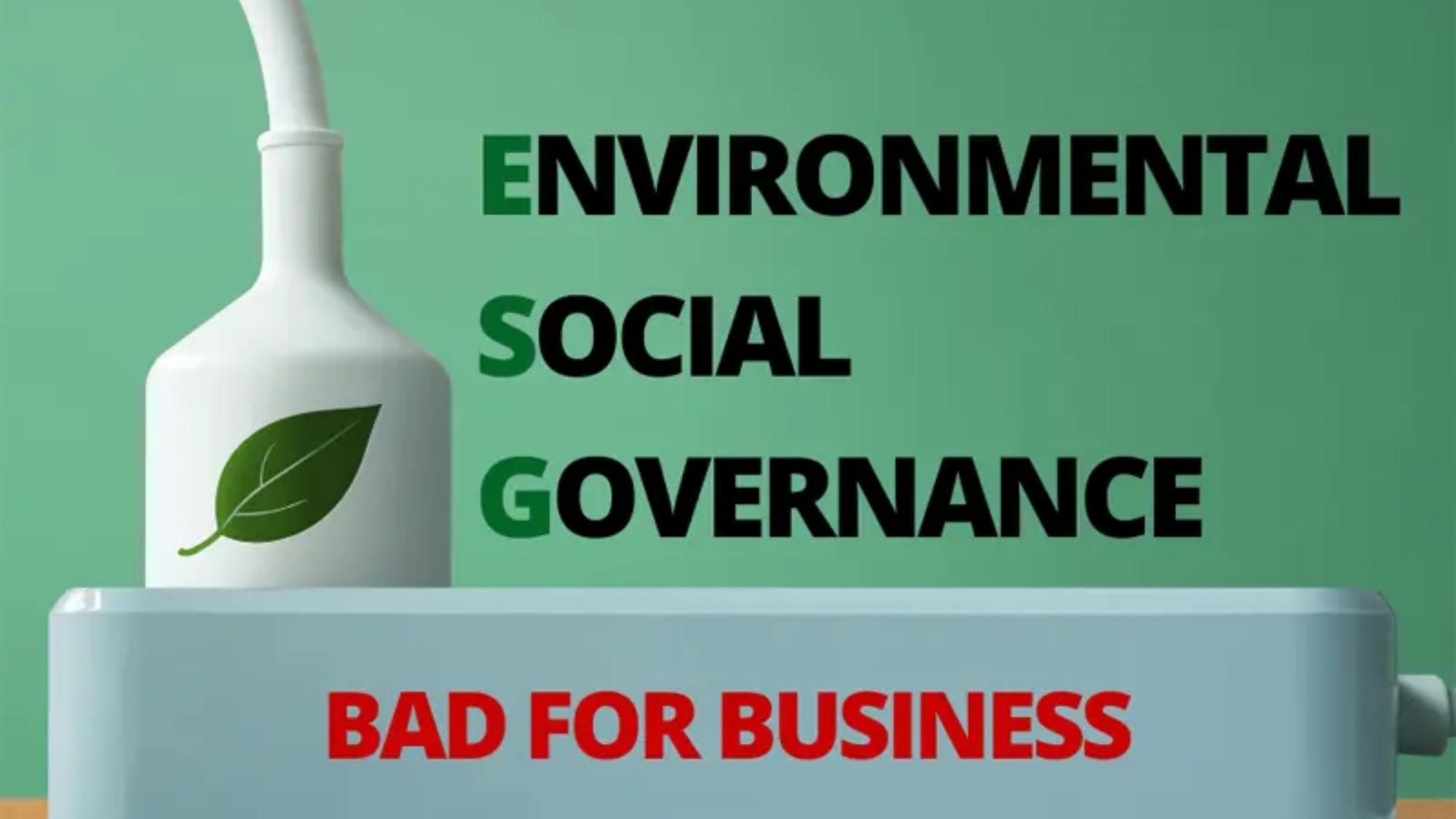
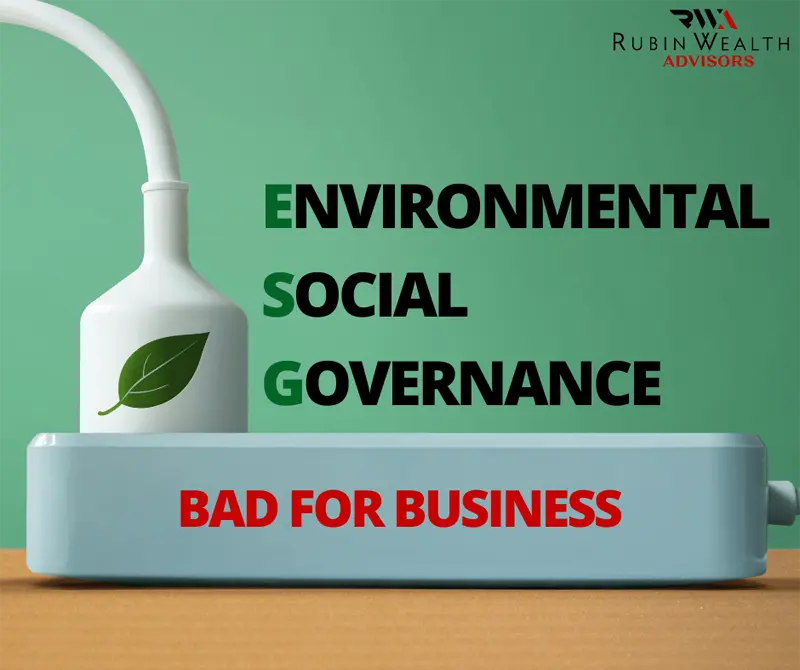
Don't Invest in ESG

Without ESG investing, the world may be better off.

Don't Invest in ESG

With environmental devastation and social injustices straining the planet, a more robust environmental, social, and governance (ESG) rating system is required to ensure investors get the positive impact they pay for.

Despite the second wave of the pandemic and post-election mayhem, nothing would have changed, and Philip Morris’ inclusion in the ESG club might have gotten more attention. There are 700 billion cigarettes sold by the company every year. Is it good at product safety, greenhouse gas emissions, diversity of the board, and other ESG factors? How did it get into the Dow Jones Sustainability Index (DJSI) North America?

The reason is straightforward. As corporate citizenship standards are so low, ESG investing, arguably the hottest trend in investing today can destabilize society and the planet in ways that would not have been possible if it didn’t exist.

The issue’s core is how ESG ratings, such as those provided by MSCI and Sustainalytics, are calculated. MSCI and Sustainalytics provide ESG ratings like those described in this article. Most ratings don’t take ESG factors into account when determining corporate responsibility. As a result of ESG factors, they evaluate whether a company’s economic value is at risk. Instead, they assess the extent to which a company’s economic value is jeopardized due to ESG factors. For example, a company may be a significant source of emissions but still receive a good ESG score if the rating firm views the pollutive behavior as well-managed or non-threatening to the company’s financial value. MSCI, one of the leading rating agencies, gives Exxon and BP an average (“BBB”) aggregate score, despite their existential threats. It’s also possible that’s why Phillip Morris made the DJSI. Rating agencies may view the company’s commitment to a “smoke-free” future as a reduction in regulatory risk, despite the company’s next generation of products still being addictive and harmful.

The second issue is how rating agencies assign weights to each ESG factor. Each company is rated based on various ESG factors, and a composite score is calculated by aggregating the scores. A strong ESG performer may

  • receive a triple-A composite score, whereas an ESG laggard may receive a triple-C score. These scores are the foundation for how ESG indexes and ESG funds build their portfolios. This may appear to be a legitimate strategy, but it is not. Inconsistent access to ESG information and human judgment lead to significant variation in rating. A company can still have excellent other metrics despite a low composite score.

Consider the brands Pepsi and Coca-Cola. The major rating agencies give both companies high ESG ratings. They are also frequently among the most significant holdings of ESG funds, owing to their high rankings on metrics such as corporate governance and greenhouse gas emissions. Nonetheless, they primarily produce, market, and sell addictive products that contribute to diabetes, obesity, and premature death. As well as funding extensive research to avoid attention from their products’ health consequences, Pepsi and Coca-Cola use their clout to avoid taxes and regulations. Due to the high cost of diabetes in the United States, these companies may undermine their economic contribution by causing human and financial harm.

Technology companies like Alphabet, Amazon, and Facebook are also among the top holdings for ESG funds. They frequently receive high ESG ratings because their greenhouse gas emissions are predictable. However, only some people would consider them to be good corporate citizens. Amazon has poor labor practices and uses predatory pricing. In addition to their business models, Facebook and Alphabet promote dangerous hate speech and misinformation on the internet. Their products appear to contribute to a rise in mental health problems among young people. Academics, policymakers, business leaders, and attorneys general have all labeled all three companies as monopolies that threaten the existence of a free-market system. If a company’s core business model causes so much harm, it should be challenging to cover it up with “good behavior” on other parameters.

A large body of research has found a positive correlation between ESG performance and financial performance using ESG rating data in recent years. Their broad conclusion is that investing in ESG factors will result in higher profits and better returns for investors. However, there are several problems with this. The first is that positive links are typically minor and highly dependent on how profits are measured and over what period. The second point to make is that correlation does not imply causation. Aswath Damodaran points out in a recent blog post the ESG mantle is just as likely to make firms successful as it is to adopt the ESG mantle. Third, and most importantly, the positive correlation is primarily due to the abovementioned ESG rating system, which has shallow performance standards. Technology companies have been outperforming the market for years, which has driven most ESG funds to overweight technology companies. Finally, amplifying business models driven by algorithms is often harmful to society and could account for much of their revenue growth.

As we move towards a critical juncture in our understanding of environmental devastation and inequality, investors will increasingly want their portfolios to reflect those concerns. Blackrock and Vanguard, two large financial institutions, have launched ESG funds based on environmental, social, and governance indices. By 2020, these funds are expected to receive nearly ten times more than they did in 2018. ESG funds have been able to charge higher management fees due to their novelty. The rapid shift in capital flows illustrates the power of business, according to proponents of “conscious capitalism.” A profitable movement aimed at driving money to harmful actors and lowering their capital costs is being celebrated by Wall Street’s top executives and CEOs.

Having an entirely new rating system to quantify the true impact of corporate behavior on environmental, social, and economic factors is essential—one that calculates the costs of a company’s “market failures.” The failure of a market involves:

  • Monopoly or monopsony, in which a seller or buyer has limited competition or outsized power.
  • Negative externalities, in which a third party is directly affected.
  • Environmental damage, including depleted forests, polluted oceans, and the clogging of our atmosphere by emissions.

Performing poorly on a single factor with high societal or environmental costs would not lead to a high aggregate score under such a system. 

For example, despite being well-governed and environmentally responsible, a company that produces harmful food products would receive a low rating.

Market failures are so common today that most corporations rated in this manner would almost certainly receive low ESG scores, significantly reducing the number of ESG investment opportunities. As a result, the entire system and the lucrative management fees charged by investment firms capitalizing on ESG investing for “conscious capitalism” could come to a halt.

That may be what we require. CEOs have pursued “growth at any cost” strategies for far too long to maximize shareholder value. Despite ongoing disasters and injustices, they are portrayed favorably through an ESG rating system that obscures the nature of their corporate citizenship. To be true ESG leaders, they will have to pay their employees more, create less addictive products, and increase their costs to protect the environment. In other words, they may have to make a profit sacrifice. Being true to ESG will take a lot of work.

If you enjoyed this article, check out our other content here!
bob rubin

Are you concerned about inflation, ESG compliances, and the 2022 crypto crash?

Your investment portfolio can be affected by any or all of these factors.

Schedule an appointment with Bob Rubin, your dedicated, conservative financial advisor, for a free portfolio analysis today.

Get started by clicking the button below.

No BS… Just straight forward advice

Contact Bob, the Nation’s Predominant
Politically Conservative Financial Advisor Today!
Call Bob @ (561) 288-1111

Email Bob @ Bob@RubinWA.com

Or schedule a call below!

investment

The Concept of ESG Investing has Evolved in Something Negative.

investment

From a half-baked idea among UN low-level staff, the green Frankenstein of Wall Street has grown into a multibillion-dollar company. One estimate puts the global value of ESG investments at nearly $2.8 trillion.


There are few guidelines surrounding the acronym, making it an undefined symbol with little guidance. In other words, farmers could market vegetables as organic but with no genetic engineering restrictions.


ESG pioneers are surprised by all of this.


As a result of ESG investing, Paul Clements-Hunt, the former UN chief, stated that the goal was to “plant a positive virus that we could spread throughout mainstream finance and investment” to raise awareness that these issues matter, they affect your long-term investments, and they matter to your bottom line. UNEP FI, which played a crucial role in popularizing the idea, played a vital role in popularizing the concept.


Whether ESG ends up for good or for foul, he said, “it is hard to believe.”


ESG took to the next level

How did it all begin?


It’s impossible to give a definitive answer. But, according to experts, the UN’s bare-bones office was the point of origin for this initiative in the early 2000s.


Under Clements-Hunt’s leadership at UNEP FI, a bold goal was established: mobilizing the world’s largest investors to address major global issues. As a stable environment and a prosperous world contribute to a more prosperous economy, the UN’s priorities are aligned with those of long-term investors.


The concept of socially responsible investment was already available from niche investment companies, religious groups, and other organizations. However, specific sectors, such as weapons manufacturers, were excluded from investment funds.

The United Nations had an ethical appeal, but they knew institutional investors were obligated to prioritize financial returns above all else and that more would be needed to lure their attention.

“In 2000, Jacob Malthouse joined UNEP FI as an intern and was challenged with breaking out of the then-standards of socially responsible investment, called SRI and ethical investing.

To convince the world’s most significant pension funds of the importance of biodiversity, human rights abuses, and climate change, they developed a plan to raise these issues. Additionally, they wanted to demonstrate that taking into account companies’ records on environmental, social, and governance issues – and their risk management practices – actually improves investing, not hinders it.


An incomplete investment process does more than ignore supply chains and labor practices, they argued. That’s a false statement.


A few roadblocks soon appeared. Nevertheless, a big goal and a small team were the hallmarks of the Finance Initiative. A few consultants or interns make up most of Malthouse’s office, which is operated on a shoestring budget.

Financial institutions themselves are another major hurdle.


Even though mainstream finance firms have yet to accept that environmental and social performance can affect their bottom lines, environmental and social issues have impacted businesses’ bottom lines for years. According to pension funds, they are legally prevented from considering “nonfinancial” factors when investing because of their so-called fiduciary duty.


A landmark research paper was commissioned by the Finance Initiative to address those concerns.


A 2004 report by mainstream brokerage house analysts argued that long-term financial returns depend on the “rigorous integration of environmental, social, and corporate governance issues” into investment processes. Analysts at Goldman Sachs Global Energy Research, HSBC Asset Management, and Deutsche Bank Global Equity Research made this argument.


The first time the three words have been used together in an official UN publication.


An institutional law firm, Freshfields Bruckhaus Deringer LLP, published the second report. “Incorporating ESG considerations into an investment analysis to improve financial performance prediction is permissible and arguably required in every jurisdiction.”, the firm wrote in 2005.

Carlos Joly, who chaired the UN’s Asset Management Working Group for over a decade, said the findings finally allowed U.S. institutional investors to take this approach.


E&E News recently reported that experts with the UN’s work at the time said a landmark effort to coordinate and draft “principles for responsible investment” – the PRI – was equally important.


Sustainability data was infused into their investment processes to motivate asset owners to invest more responsibly and even leveraged to push companies toward a greener future.


It was successful. Over $6.5 trillion in assets were represented by 63 signatories when the PRI was launched in 2006, including BNP Paribas Asset Management and the Government Employees Pension Fund of South Africa. Since then, those figures have risen dramatically. Over $121 trillion in assets were represented by nearly 3,900 investment institutions by 2021.


Gifford attributed much of that growth to one factor he pitched in his sixth week as an intern. Other institutions, such as asset managers, had to get on board to compete for their business.


Credit Suisse’s Sustainable and Impact Advisory executive, Mark Gifford, says the PRI paved the way for ESG to reach the next level.

If you’re more interested in achieving financial gains instead of perpetuating failed strategies, call Rubin Wealth Management to learn more.

bob rubin

Are you concerned about inflation, ESG compliances, and the 2022 crypto crash?

Your investment portfolio can be affected by any or all of these factors.

Schedule an appointment with Bob Rubin, your dedicated, conservative financial advisor, for a free portfolio analysis today.

Get started by clicking the button below.

No BS… Just straight forward advice

Contact Bob, the Nation’s Predominant
Politically Conservative Financial Advisor Today!
Call Bob @ (561) 288-1111

Email Bob @ Bob@RubinWA.com

Or schedule a call below!

ESG Investing

ESG is Bad: Conceptually Simple, Yet Complex

ESG Investing


“Environmental, Social, and Governance” is a hot topic when it comes to investing, but what does it mean?

We all have a moral compass, and there are some investments that we should avoid because they violate our sense of right and wrong.

Despite the illegality of the narcotics trade, we know it can yield enormous profits, but we refuse to pursue these opportunities due to their moral wrongness.

This moral compass conflict is why I suggest that ESG should be tailored to the needs of each investor.

In other words, ESG is not a one-size-fits-all solution.

Nevertheless, asset managers and corporate entities apply a one-size-fits-all approach to ESG investing.

The nature of investing is opinionated and exclusive to each individual.

Oil companies that produce hydrocarbon fuels may arouse the aversion of some people who believe anthropogenic greenhouse gas emissions pose an existential threat. Others believe global warming is no big deal, so they invest in oil majors.

Russia Ukraine Test ESG Theory

The Russian invasion of Ukraine has undoubtedly tested ESG theory. ESG activists shun the arms industry because it costs lives. Could it not be argued that the manufacture of weapons acts as a defensive deterrent?

The Budapest Accord could have prevented Russia from invading Ukraine, averting war and saving hundreds of thousands of lives if Ukraine had not agreed to disarm. Should the arms industry be excluded from capital markets based on environmental, social, and governance concerns?

Answering this question is neither right nor wrong. Different people formulate different views about politics and religion. Therefore, I argue that managing ESG objectively is not possible. In a way, it is very subjective.

Fund managers should formulate their fund manifestos and let investors use that as the basis for deciding whether or not to invest in their funds.

In my opinion, ESG is poorly done. My next point will explain why too many people treat this as a “tick-box” exercise.

In trying to create an algorithmic screen for their fund managers, asset management firms often miss the nuances of ESG. ESG criteria cannot be objectively quantified, so that this approach will fail.

How can an algorithm based on the same third-party ESG data used by every other asset manager achieve to distinguish itself by having a more strong ESG ethos than its competitors?

Similarly, ESG analysts should publish their unique subjective view of the moral compass of corporate entities, just as equity analysts do with the fundamental economics of a company. Investing responsibly is the only way an asset manager can stand out from the competition.

Why ESG Compliance is Bad

In this case, there is a kind of self-serving flywheel at work. I will explain why ESG compliance is a bad idea.

In turn, asset management companies want to attract money from self-righteous investors. Those who manage funds on both financial and ethical criteria are likely to be able to charge higher fees, knowing its criteria are increasingly important to generate more extensive fees from self-righteous investors. So, when they try to appear ethical in order to attract capital from the markets, they often shoot themselves in the foot.

What would you do in any of these situations? Do you plan to sell your shares in these companies? Are you willing to divest from an irresponsible country’s sovereign debt?

 
If you’re more interested in how to achieve financial gains instead of perpetuating underperforming woke strategies, call Rubin Wealth Management to learn more.n


bob rubin

Are you concerned about inflation, ESG compliances, and the 2022 crypto crash?

Your investment portfolio can be affected by any or all of these factors.

Schedule an appointment with Bob Rubin, your dedicated, conservative financial advisor, for a free portfolio analysis today.

Get started by clicking the button below.

No BS… Just straight forward advice

Contact Bob, the Nation’s Predominant
Politically Conservative Financial Advisor Today!
Call Bob @ (561) 288-1111

Email Bob @ Bob@RubinWA.com

Or schedule a call below!

Biden's Game of loans

Biden Student Loan Forgiveness: Pay More-Get Less

Considering the importance of the Biden student loan forgiveness, a multi-part article is warranted.

Part two of a three-part series on Joe Biden’s announcement that he intends to cancel up to $519 billion in student loan debt. In part one, I focused on the economics of the idea. 

In this piece, I will focus on subsidizing higher education and whether or not that is a good decision for the country and the student.

Unlike so many others, a fundamental principle of economics that is uncontested is that when you tax something, you will receive less of it. When you subsidize something, you will receive more of it. As a result of the “game of loans” played over the past few decades, more students are attending university than ever before.

Does College Guarantee More Pay?

Here at Rubin Wealth Advisors, we found some interesting statistics. As of the spring of 2022, approximately 16 million students are enrolled in college. Just over 60% of American high school students enroll in college immediately after their graduation. The graduation rate (students who obtain a four-year degree within six years of enrolling) is just over 60%.

Not enough time is spent considering that 60% number. There is virtually no activity that people regularly undertake where a forty-percent failure rate is deemed acceptable. Why do Americans accept this kind of failure rate on something that A) involves their beloved children and B) costs significant amounts of money? Parents have been taught to mistreat their children unless they enroll them in the most prestigious (read, most expensive) colleges available.

According to predictors of success, college graduates are more likely than their non-college-educated counterparts to be employed and earn more money. Data from 2019 shows that college graduates had an 87% employment rate compared to a 70% rate for non-college-educated competitors. 

The average earnings for a college graduate between the ages of 22-27 are $44 thousand per year as opposed to only $30 thousand per year for a high school graduate in the same age range. Those numbers alone should justify the need and the benefit of attending university, correct?

This is where we get into trouble citing statistics. We must ask the following questions if we accept the above numbers as accurate (it is difficult to collect such data, but most sources provide similar numbers).

Does College Guarantee More Pay?

Are college graduates doing better employment-wise and financially because of what they learned, or are they doing better because of what people perceive they have learned?

Here is something that might surprise you.

A 2019 study found that only 46 percent of college graduates are working in their field. Specialized fields of study, like health care, have a substantially higher rate of employment, boosting the rate. Overall, less than 40% of college graduates work in their fields.

But they have higher employment rates.

Are these college kids smarter than their high school counterparts? Anecdotal experience suggests not. Today’s recent college graduates don’t seem to emerge from the ivory tower with particularly sound, communication, or critical thinking abilities, based on my experience as a business owner and conversations with others. We don’t always get what we pay for when we hire recent college graduates; they certainly don’t get what they pay for!

Speaking of entrepreneurs, because I needed a segue, those who start privately-owned companies have long been the leaders of job creation and innovation in the American economy. They are genuinely some of America’s best and brightest. It might surprise you that research suggests that 80% of entrepreneurs are “self-made,” meaning they didn’t inherit their business. In addition, only 44% of them attended college.

That means that most entrepreneurs are people without a higher education who figured out how to make it independently.

Top 10 Areas of Study

When you look at the ten general areas of study producing today’s college graduates, here is what you find:

  • Business
  • Health professions
  • Social sciences and history
  • Engineering
  • Biological and biomedical sciences
  • Psychology
  • Communication and Journalism
  • Visual and performing arts
  • Computer and information sciences
  • Education

The “degree in basket weaving” is often mocked by college critics. If you want to succeed in the workforce, you need to invest anywhere from $21,000 (public universities) to $55,000 (private universities). There is a strong argument that accounting is the only formal education required in the most popular degree area, business. Entering the field without fluency is like ordering French food off an English menu.

More parents will accept the notion that lavish university spending is responsible parenting thanks to Joe Biden’s debt forgiveness program. Neither is the case. In almost every field, I would argue that acquiring solid skills and a strong work ethic is a far more cost-effective way to excel. As parents and employers, we need to start recognizing, encouraging, and supporting those decisions for our youth. Maybe then we can end this game of loans.

Choosing a field of study and what training or education will be required will require some funding.

Even lower cost, high-impact vocational training isn’t free! It would help if you had a financial advisor who understands the big picture to help you prepare. Before making an important and expensive decision, they will ask you tough questions. In the following piece, Rubin Wealth Advisors will examine the moral hazard of Joe Biden’s loan forgiveness program.

bob rubin

Are you concerned about inflation, ESG compliances, and the 2022 crypto crash?

Your investment portfolio can be affected by any or all of these factors.

Schedule an appointment with Bob Rubin, your dedicated, conservative financial advisor, for a free portfolio analysis today.

Get started by clicking the button below.

No BS… Just straight forward advice

Contact Bob, the Nation’s Predominant
Politically Conservative Financial Advisor Today!
Call Bob @ (561) 288-1111

Email Bob @ Bob@RubinWA.com

Or schedule a call below!

Disney450

Rubin’s Bottom 10: Disney Stock

Rubin’s Bottom 10: Disney Stock

Rubin Wealth Advisors, in conjunction with American Conservative Values ETF (ACVF) has identified the ten worst companies for political conservatives (or patriots) to invest in. Investors can’t completely avoid placing their funds into all woke companies, but they can avoid investing in the worst offenders.

Announcing “Rubin’s Bottom 10”

Let’s get to #1 Disney Stock

“Buzz Lightyear went woke. The movie went broke.” Rep. Jim Jordan, Ohio

Republican, tweeted back in June. Lightyear, Disney-Pixar’s latest film release, was by all accounts a total box office failure. In week two, the film brought in only $18 million, down from $50 million on its first weekend.

Why did the Toy Story spinoff do so poorly? Fans are probably waiting for its streaming release because Disney does not market it well.

Conservatives have a different idea. For us, we see the discontent with Disney’s anti-traditional, anti-American messaging starting to hit it in the corporate wallet. It’s an excellent start to what needs to become a trend.

Chris Evans replaces Tim Allen’s iconic voice with the ultra-woke, American-hating Captain of the Lightyear film. It is designed for children but contains a kiss between a gay couple.

It appears that the movie-going public isn’t too fond of Disney’s choices. (Top Gun – Maverick has proved that; Americans just don’t go to that movie because of the China flu).

In March of this year, Karey Burke, Disney president, announced films would represent alternative lifestyles.

According to the Independent Sentinel:

“As the mother [of] one transgender child and one pansexual child,” she supports having “many, many, many LGBTQIA characters in our stories” and wants a minimum of 50 percent of characters to be LGBTQIA and racial minorities

As a mother of two children demonstrating potential signs of mental illness, clearly, Ms. Burke should be nowhere near children’s programming. More to the point, your hard-earned dollars should be nowhere near anything she is responsible for overseeing.

Disney Leader in Woke Culture

Disney has been a long-time and very bold leader of the woke corporate movement. Not only do they have a history of wokeness, but even now, as blowback has begun against woke corporate culture and actions, causing some companies to either step back a bit or at least slow down, Disney has doubled down on their wokeness. It is as if they are saying, “We are Disney. You need us so much you can’t possibly turn away from us no matter what we say or do.”

The entertainment giant’s spread of wokeness is so expansive it is challenging to know where to begin. If you want recent, on June 30 th three former Disney employees filed suit alleging they were fired from the company for not wearing masks and refusing to get vaccinated for religious reasons during the pandemic. The employees objected to the vaccination because fetal stem cells were used in its development. Despite Florida state law to the contrary, which prohibits the forced imposition of vaccines upon employees, Disney simply pulled down its corporate mask and spit into the eye of the employees and the state.

Disney intro is now: WELCOME DREAMERS OF ALL AGES aka illegal immigrants!

The well-known introductory refrain of Disneyland and Disneyworld has been changed from “Ladies and gentlemen, boys and girls…” to “Welcome dreamers of all ages”. (I am assuming by “dreamers” they meant people who enter the country illegally). This was part of their new “Diversity & Inclusion” policy designed to encourage hate under the guise of love. Yahoo News reported at the time of the welcome-language change:

“Inclusion is essential to our culture and leads us forward as we continue to realize our rich legacy of engaging storytelling, exceptional service, and Disney magic,” Josh D’Amaro, chairman of Disney Parks, Experiences and Products, wrote in an April blog post on the company’s website. “We want our guests to see their backgrounds and traditions reflected in the stories, experiences, and products they encounter in their interactions with Disney,” he continued. “And we want our cast members—and future cast members—to feel a sense of belonging at work.”

Disney’s diversity policy addresses the areas of people, community, and content. As to the latter, the policy reads:

I apologize if the preceding just made you throw up in your mouth.

Despite its flowery language, it’s always about what sort of specific actions are spawned from this script, not what sort of random decisions are taken. In Disney’s case, it means the denial of biology, same-sex couples kissing in children’s films, and, of all things, a ‘lady Thor.”

Having lived in Florida for over 50 years, Disney World’s outright lies disgusted me.  Earlier this year, when Florida Governor Ron DeSantis signed into law a bill that restricts the teaching of sexual content to children in kindergarten through third grade, Disney joined into the openly deceitful movement of characterizing the law as a “don’t say gay” piece of legislation. A company that reaches out to young children opposes a law banning sex education.

Why?

I’ll leave that one up to you to answer.

Disney is typically self-righteous, especially when it is a for-profit business.

The company that is so concerned about people being treated fairly isn’t quite as concerned when it comes to China. This was evident when Disney filmed some scenes in the live-action remake of Mulan in China. A brutal repression campaign was conducted by the Chinese government in the province where the filming took place against the Muslim Uighur people. The movie’s end credits mention it was partly filmed in Xinjiang, but no one noticed until some viewers posted on the internet.

Breitbart News reported:

Mulan’s end credits include a special thank-you to the Turpan Municipal Bureau of Public Security, according to a screenshot from the movie. The city of Turpan, which is located in the northwestern Xinjiang region, runs a concentration camp for Uyghur Muslims where detainees are forced to recite Communist Party propaganda, according to a 2018 investigation by The Wall Street Journal.

Even the Washington Post, itself an anti-American rag typically supportive of Disney-style wokeness, was critical of Disney for this one

“Why did Disney need to work in Xinjiang? It didn’t.

In addition to China, there are many countries around the world that offer the same breathtaking mountain scenery. In doing so, Disney normalizes a crime against humanity,” said Asia Society senior fellow Isaac Stone Fish.

Disney stock has worked hard to reach the “top” of a bottom-of-the-barrel list of corporate wokeness. Not only does this company not deserve your investment dollars, it doesn’t deserve any! Divest your stock, buy different toys, vacation in Clearwater instead of Orlando, and go see Top Gun – Maverick!

bob rubin

Are you concerned about inflation, ESG compliances, and the 2022 crypto crash?

Your investment portfolio can be affected by any or all of these factors.

Schedule an appointment with Bob Rubin, your dedicated, conservative financial advisor, for a free portfolio analysis today.

Get started by clicking the button below.

No BS… Just straight forward advice

Contact Bob, the Nation’s Predominant
Politically Conservative Financial Advisor Today!

Call Bob @ (561) 288-1111

Email Bob @ Bob@RubinWA.com

Or schedule a call below!

facebook

Time to “Unfriend” Meta in Your Investment Portfolio

Grey Work From Home Facebook Post

Rubin Wealth Advisors, in conjunction with American Conservative Values ETF (ACVF)has identified the ten worst companies for political conservatives (or patriots) to invest in.

Investors can’t completely avoid placing their funds into all woke companies, but they can avoid investing in the worst offenders.

Announcing “Rubin’s Bottom 10”

Let’s get to #3

If you are an American who believes strongly in First Principles, private property rights, and the U.S. constitution, you are not likely to be getting a “friend request” from Meta Platforms Inc., aka Facebook, (NASDAQ) anytime soon. The social media monster and its founder, Mark Zuckerberg, have made no attempts in their outright hatred for traditional American ideals. In fact, Zuckerberg went so far as openly spend money to destroy them during the 2020 election.

Meta Pulls the Rug on Conservatives

While Facebook is the “face” of the recently rebranded Meta, several other companies, including Instagram and WhatsApp, also fall under its umbrella. With Facebook being one of the earliest entrants into the world of unsocial social media and being one of the few survivors, its power, combined with its satellites, is significant. Many conservatives came to rely on Facebook as a way to share their message at a very low marginal cost, only to have the platform turn on them and pull the rug out from underneath.

The stories of conservative political candidates having their Facebook platforms silenced or demonetized goes back as far as at least 2018, when they began silencing primary candidates who were running on an agenda that included support for the policies of then-President Donald Trump. One such candidate was Californian Erin Cruz, who was running for a U.S. House of Representatives seat in that state. Numerous other candidates reported similar instances of censorship for doing nothing more than promoting their platform and trying to engage voters.

Facebook’s “fact-checking” (also used on Instagram and WhatsApp) are guilty of the same sort of not-so-arbitrary abuses as they routinely target candidates, media, and everyday citizens for posting information contrary to their preferred globalist, collectivist narrative. The highly respected digital daily publication Human Events was a victim of such a practice in 2021 when Facebook placed them in “Facebook Jail” for three stories deemed to be factually inaccurate. All were proven to be on target.

Liberal Fact Checkers Rule FB

Facebook uses what they call “independent fact-checkers” to decide what content can and can’t be posted. Their partner in this is the International Fact-Checkers Network, who, when you visit their website, is led by a board of team left members, some of whom are from recognized names like the Washington Post, others who are from unknown organizations of dubious origin, and funding. One of the fact-checking entities is a group known as Science Feedback, a group whose feedback in censoring a post by highly-respected Reason Magazine back in 2021 led to Facebook having to acknowledge a fact-checking error in the fact-checking. While that incident was highly publicized, most such instances go unnoticed because the victim is simply not big enough to fight back.

A similar approach is taken with the advertising and promotion of rallies and special events hosted by conservatives who dare to use the term “patriotic” in their materials. In the early summer of 2020, the Red White n’ Blue’s tour promotion for a July 4th weekend event featured patriotic imagery was repeatedly censored by Facebook, with anyone posting the digital flier finding it taken down or having their account suspended.

The suppression of the July 4th event is consistent with other various reports of anti-American activities at Meta. In 2016, Facebook’s employees were accused of suppressing conservative articles in Facebook’s newsfeed “trending” section, which has since been discontinued. Specifically, the platform prevented stories about CPAC from going into the newsfeed through its “news curators” contractors. Facebook denied that it happened.

For those concerned about personal security, there have been numerous stories over time about Facebook’s either careless or deliberate disregard for user privacy. In 2018, Facebook became embroiled in a scandal when the British firm Cambridge Analytica sold user data to the Trump campaign. The controversy focused on how Cambridge Analytica obtained Facebook user data without user consent and made money off selling the acquired user data.

While Washington has done little to curtail Facebook’s power (many politicians inside the ruling class benefit from their activities), it has not escaped notice. Hearings have been held where comrade Zuckerberg has been forced to testify, but he is so confident in his absolute power that he encouraged Congress to regulate him! That’s a man who knows he controls the system!

It isn’t just me who has a bad attitude regarding Meta. In 2019, a report by former Sen. Jon Kyl and Covington & Burling LLP found that conservatives distrust Facebook due to:

    • Ad labeling requirements (which potentially jeopardized non-profit status due to “political” labels)
    • General ad policies (which said no ‘shocking and sensational content.’ used to prohibit pro-life ads until the policy was changed)
    • Lack of page transparency about “false” ratings from the platform.
    • Lack of conservative viewpoint diversity in the company,
      slow ad-approval process.
    • lack of an oversight board to overlook appeals and decisions
    • Lack of transparency about algorithms and content on users’ feeds.

With all of that noted, nothing that Meta has done on any of its three main platforms compares to the interference of Zuckerberg in the 2020 election. Using his organization Center for Technology and Civic Life (CTCL), Zuckerberg poured $350 million into the 2020 election to “help ensure that Americans could vote during the height of the pandemic.”  Much of CTCL’s money found its way into strategic areas in swing states that magically swung to Joe Biden long after polls were closed on election day. The movie 2000 Mules did a fantastic job of making the case for election tampering.

To bring this home for me, one of my former marketing folks, whose role was to organize and optimize our Facebook advertising, expressed continued frustration at Facebook’s ongoing advertising censorship. Whenever he submitted an ad to Facebook that contained the words patriotic, Trump, or politically conservative our ad submission would be declined due to community standard violations. He would speak to his Facebook advertising sales rep, who said he would take care of it. Never happened. The only fix was to remove the “offending” words from the ad submission.

As mentioned in a prior piece in this series, Nike was a very early adopter of woke- corporate policies. While Nike may have helped launch the curve, Meta and its various entities have been an inflection point along its path. While it is a great place for grandparents in Boca Raton to view pictures of their grandchildren in Seattle, it is not a great place from which to view photos of your investment account statements.

“Dislike” Meta in your portfolio and then “Unfriend” them for good.

To read the next article in the series, click here.

bob rubin

Are you concerned about inflation, ESG compliances, and the 2022 crypto crash?

Your investment portfolio can be affected by any or all of these factors.

Schedule an appointment with Bob Rubin, your dedicated, conservative financial advisor, for a free portfolio analysis today.

Get started by clicking the button below.

No BS… Just straight forward advice

Contact Bob, the Nation’s Predominant
Politically Conservative Financial Advisor Today!
Call Bob @ (561) 288-1111

Email Bob @ Bob@RubinWA.com

Or schedule a call below!

American

America’s Great Wealth Migration

America’s Great Wealth Migration

American

America’s Great Wealth Migration

Within American states, the last two years have seen a dramatic shift of
relocation (both for individuals and businesses) and family income within
our country. About 70% of the moves were from urban to urban areas, and 56%
moved from suburban to suburban areas. The shift was from high-tax and
high-regulations states, to low-tax and reasonable-regulations states. Money
walks, and moves to where it is welcome. Just as important, these trends are
expected to become long-term

U.S. cities with populations over 1million experienced an 88% decline in
their growth rates from 2010 to 2018. New York and California were hit
hardest. New York lost 1.6% of its population but almost 3% of its income,
meaning that the people who left were big taxpayers and big earners. Low
taxes, low crime rates, and the freedom to live your life without fear of
government intrusion are the main reasons for the Great Migration.

40 Billion Vanished

In 2020, a total of $40 billion of income was lost by California and New
York. Most of the money went to Florida ($24B), Texas ($12B) and Arizona
($4B). California’s big state income tax is driving people out, along with
major increases in the cost of living, a terrible legal environment of
anti-business laws, high prices, and the homeless/drug problems in the
larger cities. It is also the most regulated state in the U.S. In recent
years, California has lost 2.6 million residents, even with big-time foreign
immigration. The California counties that have seen the largest exit of
their population are San Francisco, San Mateo, and Santa Clara. New York
also saw a huge decrease in population, with roughly 70,000 leaving in 2020
alone. An example of why: New York City’s budget expenditures are equal to
all of Florida.

Business headquarters are also abandoning California, which has seen 265 headquarter relocations from 2019 to 6/30/2021. The monthly average losses in 2021 were 12. And this is probably an undercount, since many relocations are not made public. The Tax Foundation ranks California 49th on its state business tax-climate rankings. Only New Jersey has a worse tax climate.

If Americans want to remain as attractive on the international stage, the states should adopt policies that make us more like Florida and Texas and less like California and New York. But, unfortunately, the Biden administration and Congress are trying to turn the country into California.

Forbes stated, “America has had the strongest, most dynamic economy in the world for the last 80 years, but economic success is not guaranteed. The wrong public policies slow innovation, deter new business formation, and repel talented workers.” Just look at California and New York. John R Smith

This article was written by John R Smith.

bob rubin

Are you concerned about inflation, ESG compliances, and the 2022 crypto crash?

Your investment portfolio can be affected by any or all of these factors.

Schedule an appointment with Bob Rubin, your dedicated, conservative financial advisor, for a free portfolio analysis today.

Get started by clicking the button below.

No BS… Just straight forward advice

Contact Bob, the Nation’s Predominant
Politically Conservative Financial Advisor Today!

Call Bob @ (561) 288-1111

Email Bob @ Bob@RubinWA.com

Or schedule a call below!

Politically conservative investment: Considering Nike Investment? Just Don’t Do It!

Considering Nike Investment? Just Don’t Do It!

Rubin Wealth Advisors, in conjunction with American Conservative Values ETF (ACVF) has identified the ten worst companies for politically conservative investment. Investors can’t completely avoid placing their funds into all woke companies, but they can avoid investing in the worst offenders. Announcing “Rubin’s Bottom 10”

Let’s get to #4.

When it comes to being a woke corporation, it seems that since the second “summer of love” in 2020, the attitude that exists within C-suites and boardrooms when contemplating social justice activism can be summed up with the phrase, “Let’s just do it.”   When it comes to Nike, Inc. (NYSE-NKE) however, the phrase is, “We just did it.” The sports apparel giant has been “woke” long before the term ever entered the American political lexicon.

The Nike story is different than the others that have been written about previously in this series insofar as up until they openly embraced one of America’s most public haters, Colin Kaepernick, their wokeness had revolved around things that a reasonable person might genuinely call “inclusiveness.”  Nike’s woke behavior is offensive in two differing ways. The first is like all of the other companies we have mentioned, where they take an openly anti-America stance, the face of which has been Kaepernick.

The second is the rank hypocrisy of their preaching to us about inclusions when they are producing their product with slave labor overseas. Adlai Stevenson once described a hypocrite as someone who would cut down a tree and then stand on the stump to make a speech against cutting down trees. That is exactly where Nike has been standing since the 1980’s when they ran their first “Just Do It” advertisement featuring 80-year-old Walter Stack, a Bay Area runner who had reportedly run over 62,000 miles in his lifetime. This was Nike speaking out against ageism before anyone knew what ageism was.

But I wonder who was forced to make Walter’s shoes?

Nike continued with its celebrated ad campaigns over decades featuring sports that took on issues like participants with HIV/AIDS, women in collegiate sports, and handicapped athletes. None of these “causes” can be criticized on their face, as it is hard to argue against the inclusion of any of these groups in athletic activities. You can even go so far as to say that Nike was doing a public service by running widely seen ads designed to increase awareness and acceptance.

Still, I keep wondering who made the apparel the folks were wearing in all of these high-priced, super-slick ads.

Nike Wokeness Curve is Sky High

In 2017 Nike found an inflection point on its journey along the wokeness curve by launching a series of ads on equality featuring anti-American celebs like Lebron James and Michael B. Jordan. Those ads set the stage for their welcoming embrace of Kaepernick starting in September 2018 when they ran their first ad featuring the very average NFL quarterback who found a way to be half-Marxist, half-moron while kneeling for our National Anthem before a football game.

The man who was so hateful that he would wear a t-shirt suporting the image of the murdering Che Guevara to practice, and so plainly stupid as to call the U.S. a racist country while he was making millions of dollars without constraint in this country’s free market has become the most identified face of the Nike brand for the past four years.

Over that time, Kaepernick has continued to make offensive statement after offensive statement and has joined forces with the hate group Nation of Islam. Nike’s response has been to continue and amplify its relationship with Kaepernick.

So, where does good ‘ole Colin get his shoes from, anyway?

In March of 2020, the Washington Post published a piece written by Australians Vicky Xiuzhong Xu and James Leibold of the Australian Strategic Policy. The pair had been researching the activities of the Chinese using forced labor for manufacturing production.

Nike Supports Forced Labor in China

Their report read, in part:

Your favorite pair of Nikes might have been made using forced labor. So might many of your other favorite product. For months, our team of researchers based in Australia has been tracking the movement of Uighur citizens from their homeland in the western region of Xinjiang to other parts of China. We found that in the past three years, more than 80,000 of them have been transported to factories across China, where they are compelled to work on production lines linked to at least 83 brands….

Based on our information, The Post’s Anna Fifield visited a shoe factory in Qingdao producing sneakers for Nike and found that it resembled a prison, with barbed wire, watchtowers, surveillance cameras and a dedicated police station. Uighur workers at the factory, she was told, did not come on their own accord, nor could they return home for the holidays.

The stories about Nike using forced slave labor have been proliferating for decades, every bit as long as has been their various advertising campaigns promoting social justice. Once again, showing their ability to get in front of things, Nike has been virtue signaling long before that term came into common usage. And, under the can it get worse section, the NY Times reported that Nike is lobbying Congress to weaken a bill that would ban imported goods made with forced labor in China. Nike wants to be able to use forced labor to make its products.

As a patriotic investor, you simply cannot allow yourself to be sucked into Nike’s hypocritical claims of righteousness and inclusion when not only have they now turned openly hostile to American values, but when they have been silently promoting slavery for decades while at the same time they were trying to “teach” you how to love and support your fellow man.

When it comes to investing in Nike, the simple phrase is, “Just Don’t Do It.

To read the next article in this series, click here.

bob rubin

Are you concerned about inflation, ESG compliances, and the 2022 crypto crash?

Your investment portfolio can be affected by any or all of these factors.

Schedule an appointment with Bob Rubin, your dedicated, conservative financial advisor, for a free portfolio analysis today.

Get started by clicking the button below.

No BS… Just straight forward advice

Contact Bob, the Nation’s Predominant
Politically Conservative Financial Advisor Today!
Call Bob @ (561) 288-1111

Email Bob @ Bob@RubinWA.com

Or schedule a call below!

att450

AT&T working against conservative values: Let Your Dollars Do The Walking Away From AT&T

Let your dollars do the walking away from AT&T

Rubin Wealth Advisors, in conjunction with American Conservative Values ETF (ACVF) has identified the ten worst companies for political conservatives (or patriots) to invest in.

Investors can’t completely avoid placing their funds into all woke companies, but they can avoid investing in the worst offenders.

Announcing “Rubin’s Bottom 10”

Let’s get to #5..

Visit the website of AT&T (NST:T) and you will find a whole host of communication offerings available to you.  They have phones, devices, internet, television, and, for your local fentanyl dealer, prepaids!  What they don’t advertise across the banner of their site is their newest way to “reach out and touch someone”, that being their woke corporate policy.

Unlike some of the other woke corporations I’ve written about in this series; AT&T has seemingly stayed below the radar when it comes to public awareness of their anti-American agenda.  For whatever reason, conservative activists who have been quick to draw attention to the likes of Alphabet and Amazon, have kind of let AT&T slide, this despite the fact that they are every bit as offensive in their conduct as are the other publicly traded companies who virtue signal at every turn, sometimes doing so through AT&T platforms.

That ends now.

Like so many other companies that have eschewed ROI goals for those of social justice, AT&T had their spiritual awakening in the early summer of our discontent, June of 2020.  

Then-CEO Randall Stephenson penned a June 2020 open letter entitled, “The Mandate for Equitable Justice,” which called for police reform such as reviewing police officer immunity, and claiming there is “implicit racial biases” throughout all organizations. The piece is worth reading in its entirety because while it is brief, it contains virtually every catchword and phrase that can be used to make the essential point of “Woke corporation good.  America bad.”

In his letter, Stephenson invokes the names of George Floyd, Breonna Taylor, Ahmaud Arbery and Rayshard Brooks (gosh, he forgot Trayvon Martin, Michael Brown, and Eric Garner-guess they weren’t trendy anymore) to suggest that there is some sort of conspiracy in America that involves police deliberately targeting Blacks.

He does so without providing any further context with regard to Black-on-Black crime, actual police-minority engagements and their typical outcomes, or any of the other data that has been so brilliantly analyzed by Heather Mac Donald at the Manhattan Institute and others like her. Providing that context would reveal that there is no systemic problem, and that AT&T is simply doing what other large corporations are guilty of doing which is cherry-picking data to justify their own initiatives.  Those initiatives typically create policies of reverse discrimination and, in this case, detract from their primary purpose of being a communications company.

The company has gone further by establishing a page on its website devoted to its latest efforts to promote “Diversity, Equity, & Inclusion.”  On it, they post the usual articles designed to give site-surfers the feeling that they are always using their AT&T powered smartphone from the virtual corner of Haight & Ashbury, no matter where they might physically be.  Even though the page has “We Stand for Equality” in giant font as you land, that turns out to be not enough for the BLM folks.  They have still criticized AT&T for being part of a very subversive group, the American Legislative Exchange Council that promotes, wait for it, “the principles of limited government, free markets, and federalism.”

Seems as though AT&T might be learning what Neville Chamberlain learned over 75 years ago; those policies of appeasement don’t always work.

Further, AT&T joined with other companies in vowing to drop support for Republican candidates in the wake of the fake insurrection on January 6th of 2020.  As reported by the failing New York Times:

Marriott International, Dow, Airbnb and Morgan Stanley were among those that said they would halt donations from their political action committees, or PACs, to the 147 Republican members of Congress who objected to certifying the election results on Jan. 6. The plans to object to the results appear to have contributed to the deadly storming of the Capitol that day. AT&T, whose PAC donated the most of any single public company in the 2019-20 election cycle, also said it would suspend contributions to those lawmakers.

Given what now we know, thanks to the work of patriots like Dinesh D’Souza with his film 2000 Mules, and others election integrity activists across the country, it seems like there was good reason to object to certifying the election results of 2020.  None of those 147 Republicans can even be remotely tied to folks entering the Capitol that day at the invitation of the DC police who were securing the building by opening the gates.  Despite that fact, woke AT&T saw it as an excuse to simply no longer contribute to candidates who, generally speaking, do not support the same fascist model of socialism as does the corporation fka “Ma Bell.”

AT&T has tried to be too cute by half in approaching the social justice claims made by woke companies.  It could be that they are trying to have it both ways by saying things and doing things that are somewhat in conflict with one another.  That, however, is something from which you as an investor should not let them get away with.  If AT&T wants to try to be half in, you should take your money all out.  There is no reason for you to support their cowardice and pandering.

Let your investment dollars doing the walking away from the cowardly yellow pages on AT&T’s website.

To read the next article in this series, click here.


bob rubin

Are you concerned about inflation, ESG compliances, and the 2022 crypto crash?

Your investment portfolio can be affected by any or all of these factors.

Schedule an appointment with Bob Rubin, your dedicated, conservative financial advisor, for a free portfolio analysis today.

Get started by clicking the button below.

No BS… Just straight forward advice

Contact Bob, the Nation’s Predominant
Politically Conservative Financial Advisor Today!

Call Bob @ (561) 288-1111

Email Bob @ Bob@RubinWA.com

Or schedule a call below!

comcast

Investing in Comcast: Politically Conservatives Say No!

comcast


Don’t let yourself be Comcast’s IFP (Investment Funds Provider)

Rubin Wealth Advisors, in conjunction with American Conservative Values ETF (ACVF) has identified the ten worst companies for political conservatives (or patriots) to invest in.

Investors can’t completely avoid placing their funds into all woke companies, but they can avoid investing in the worst offenders.

Announcing “Rubin’s Bottom 10”

Let’s get to #6.

Philadelphia-based Comcast Corporation (NASDAQ: CMCSA) is far more than just “Wokeness, the Cable Guy.” The company once known almost exclusively for hooking up cable TV in your home, and then providing you with years of increasing bills and decreasing service quality, is now controlling everything from the programming you receive through your cable service (NBC, Telemundo, Sky, and Peacock), to the internet you are using to work from home, to your vacations with your children (Comcast operates the Universal Studio theme parks).

Much like SpongeBob SquarePants a show easy to locate somewhere almost 24/7 on Comcast cable, the entertainment conglomerate is everywhere you look.

So are their very woke corporate policies, the effects of which, unlike their television service, cannot simply be turned off by pressing a button on your remote. Comcast has been terrorizing traditional American sensibilities for well-over a decade and are doing so at an ever-increasing rate.

On June 8th, 2020, not long after the George Floyd incident, Comcast CEO Brain Roberts announced that it was Comcast to the rescue with a $100 million social justice war chest. His statement read in part:

To that end, we are developing a comprehensive, multiyear plan to allocate $100 million to fight injustice and inequality against any race, ethnicity, gender identity, sexual orientation or ability. There will be $75 million in cash and $25 million in media that will be distributed over the next three years, in addition to the existing commitments our company currently makes to thousands of organizations…

Forget for a moment (check that; don’t forget) that Comcast is supposed to be in the entertainment business. Setting aside $100 million of funds in a publicly traded company in order to “fight injustice and racial inequality” is fiscally irresponsible and a violation of its fiduciary duty to maximize shareholder value. There is no shareholder ROI associated funding most woke activities. Like, go woke, go broke.

It is also important to keep in mind that Comcast’s idea of fighting injustice and addressing racial inequality just might not jibe with what conservative’s feel is appropriate with regard to those issues. Woke companies tend to be among the worst when it some to selective moral relativism.

An example of that kind of disconnect can be found in the program that Comcast started during the pandemic when they offered “RISE grants” to business that were harmed by the lockdowns and other measures imposed to fight the Chinese coronavirus. In their very woke statement explaining the program, Comcast declared that it was just to help women and minority-owned businesses, a statement that essentially implies that if you are a white male business owner, you weren’t hurt by the pandemic, or if you were you probably had it coming.

The discriminating nature of their program led lawsuits being filed by some businesses, including one by Christopher Moses, an Indianapolis-based owner of a commercial cleaning service. In a WSJ editorial, Mr. Moses wrote of the RISE program:

The discriminating nature of their program led lawsuits being filed by some businesses, including one by Christopher Moses, an Indianapolis-based owner of a commercial cleaning service. In a WSJ editorial, Mr. Moses wrote of the RISE program:

While part of Comcast’s woke racial polices might just be a little CYA after their being sued previously by Byron Allen for discrimination and a group of Chicago employees, their ongoing efforts in programming and theme park management indicate that their heart really is in this culture war battle.

Recently, NBC News refused to cover the BLM purchase of a $6 million California mansion. This despite the fact that Comcast has been squarely behind BLM-type initiatives. NBC has been known for covering up news stories that do not support progressive narratives. The BLM “non-story” in April is just the latest example of their not letting facts get in the way of promoting their agenda.

Primetime programming is notoriously woke, with their long running series “Law & Order-SVU” perhaps being the grey-haired lady of wokeness, having introduced progressive themes into their weekly scripts long before the term “woke” was coined.

Finally, at Universal Orlando Resort, their Suess Landing area may not be fully reopened, in part owing to their “If I Ran the Zoo” playground which is derived from the book of the same title that allegedly contains, “offensive stereotypes.” Comcast is going on beyond woke in targeting the most prolific children’s author in American history.

Comcast has demonstrated that it has all the bandwidth needed to wire your home with every sort of woke cause that can be conceived. As a conservative investor, not only are their values offensive, but their recklessness with funds should also be concerning. Every dollar spent on woke initiatives is a dollar taken away from your potential return.

Change the financial channel and invest your dollars somewhere other in Comcast Corporation. While they might be down-streaming content into your home, there is no reason for you to be upstreaming hard earned dollars into their corporate coffers.

To read the next article in the series, click here.

bob rubin

Are you concerned about inflation, ESG compliances, and the 2022 crypto crash?

Your investment portfolio can be affected by any or all of these factors.

Schedule an appointment with Bob Rubin, your dedicated, conservative financial advisor, for a free portfolio analysis today.

Get started by clicking the button below.

No BS… Just straight forward advice

Contact Bob, the Nation’s Predominant
Politically Conservative Financial Advisor Today!
Call Bob @ (561) 288-1111

Email Bob @ Bob@RubinWA.com

Or schedule a call below!